
- Around 95% of your buyers are out of the market today, so your brand's job is to be remembered when they're ready
- The vendor buyers prefer before talking to sales wins 80% of deals
- Move towards 46% of marketing spend on brand building, and judge it over quarters
- Write your brand down as rules your team and its AI tools can follow, so work made with AI stays on brand
- Paddle Creative's brand sprint delivers it all, including a Claude Design System, in under 3 weeks for £3,950 + VAT (about $5,500)
Quick answer
Treat B2B branding as a growth tool. Agree your positioning first, then build an identity, voice and guidelines that your team and its AI tools can follow, and keep them consistent everywhere buyers meet you. Most buyers are months from purchase, so judge your brand over quarters and make it the one they remember.
Your company has probably outgrown its brand. Nobody has said it out loud yet, but the logo was made in a hurry before the seed round and the website still explains last year's product. Meanwhile every sales deck uses a slightly different shade of blue.
B2B branding is how a growing company gets remembered and shortlisted by buyers long before they speak to sales. This guide covers what a B2B brand is made of and why it matters more than most boards expect. It also covers what to spend and how to roll a new brand out without losing a quarter to it. And since your team probably drafts with AI already, it shows how your brand can keep those tools in line.
1. What is B2B branding?
B2B branding is the work of deciding what your company stands for, then making it look and sound consistent everywhere a buyer meets you. That means your website, your sales deck, your LinkedIn page and the proposal that lands in a procurement inbox at 4pm on a Friday.
Strategy names the buyer you are for and the problem you solve better than anyone else, with proof attached. Identity is what most people picture when they hear the word brand: the logo, colour, type and photography. Voice is how you sound in an email or a proposal, and it drifts fastest once a team starts writing with AI tools.
A brand is only as useful as the rules and files that let your team use it, so guidelines belong in the brand too. For the basics in more depth, read what a brand is and why it matters.
- Strategy: positioning, audience, values and messaging
- Identity: logo, colour, type and imagery
- Voice: how you write, with clear dos and don'ts
- Guidelines: the rules and files that keep it all consistent
2. Why does branding matter so much in B2B?
Because most of your buyers are nowhere near ready to buy, and when they are, they go to the names they already know.
The LinkedIn B2B Institute and the Ehrenberg-Bass Institute found that around 95% of your potential buyers are out of the market today (LinkedIn, 2021). The same research notes that 80% of companies change banking services once every five years. That's a long wait for a sales call.
When buyers do come into the market, they make up their minds early. 6sense surveyed more than 4,000 B2B buyers in 2025 and found that 94% of buying groups had ranked their preferred vendors before first contact. The vendor they preferred before engaging with sellers went on to win 80% of deals (6sense, 2025).
So a B2B brand has two jobs. It has to stay memorable to people who are months or years from buying, then look like the safe, obvious choice on the day they start. That's a tall order for a website that calls you "innovative" in every second paragraph.
3. How much of your marketing budget should go on brand?
More than most growing companies spend today, even if you get there gradually.
In research for the LinkedIn B2B Institute, Les Binet and Peter Field found that B2B businesses grow best with around 46% of the budget on brand building. The other 54% goes on activation (Binet and Field, 2019). Brand building means reaching the whole market over time with work people remember. Activation is the demand side you already know well: paid search, retargeting, demo offers and outbound.
Their report puts it plainly: "In B2B, emotional messaging is more effective in the long-term, and rational messaging is more effective in the short-term". That matters, because most B2B copy is still written as if the buyer is a spreadsheet.
Treat 46% as a direction of travel for the next year or two. A sensible first step is to ring-fence a fixed share of spend for work that builds memory, such as thought leadership, video and a distinctive identity. Then judge it over quarters, because the board's favourite question, "how many leads did the brand get us this week?", has no fair answer.
So what do you tell a CEO who wants every pound tied to pipeline this quarter? We tell them the brand is the foundation of everything that comes after, and if your brand is off, your results will be too. It matters even more in the AI era, when brands are morphing into each other and a strong one is what helps you stand out.
Our brand sprint gives you strategy, identity, voice, guidelines and a Claude Design System for a fixed £3,950 + VAT (about $5,500). Book your strategy call.

4. When does a growing company need a new brand?
Usually when the business has changed faster than the way it presents itself. The product has moved upmarket, the buyers are more senior, and the brand still looks like the side project it started as.
When a scale-up comes to us, the most common sign is a brand that no longer represents where the business is, or where it wants to go. It usually lacks a cohesive or scalable design system too, which leaves it looking inconsistent from one platform to the next.
Swap is a good example of the moment. After launching in 2022 with a website built by Paddle Creative, it grew fast and wanted to reposition itself with a rebrand and a new product offering. We worked with Swap's designers and team to take the new site from Figma to live in a few weeks. The Swap case study has the full story.
A refresh updates the look and feel while keeping your positioning and name. A rebrand goes further and rethinks what you stand for, and sometimes the name too. The reasons are covered in more detail in why businesses rebrand. These are the signs worth taking seriously:
- You've moved upmarket and the brand still looks seed-stage
- You're entering a new market, such as the US
- A funding round, merger or new product line is coming
- Your website, deck and LinkedIn page each look different
- Your homepage would still work with a competitor's logo on it
5. What should a B2B brand include?
A brand you can use on Monday morning, with everything your team needs to apply it without calling the designer.
Start with the strategy, because every visual decision is easier once the positioning is written down. A positioning statement can be a single sentence: for [your buyer] who [has this problem], [your company] is the [category] that [main benefit], because [proof]. If your leadership team can't agree on how to fill in those blanks, sort that out before anyone opens a design tool.
Then comes the identity, built as a system that works on a slide, a trade show stand and a 32-pixel favicon. Colour does more work than people expect, as the power of colour explains. Accessibility belongs in that brief from the start. WCAG 2.2 asks for a contrast ratio of at least 4.5:1 for normal text (W3C, 2023), so test your colours early.
Type matters just as much, and it's the quickest way to make a brand feel expensive or cheap. You'll find the detail in why typography matters. This is what a complete B2B brand should hand you:
- A positioning statement and messaging framework
- Brand values and personality
- A logo suite for every size and background
- A colour system checked for accessibility
- A type system and art direction for photos
- A tone of voice guide with dos and don'ts
- Guidelines, a file kit and a design system for AI tools
6. How long does a rebrand take, and what does it cost?
A traditional rebrand tends to run for months, with rounds of workshops, presentations and feedback in between. Somewhere around version 14 of the logo, everyone forgets what problem the brand was meant to solve.
In our experience, a poor process and inadequate discovery are always the crux of a slow rebrand. If everyone knows their role, the deadlines are agreed and there is a thorough discovery, the process is always more successful.
That's the thinking behind Paddle Creative's brand sprint, which takes under 3 weeks for a fixed £3,950 + VAT (about $5,500). You get positioning, values and messaging, the full identity and a tone of voice guide. Guidelines come in PDF and Figma with a file kit, and every new sprint now includes a Claude Design System set up from them. Quick feedback at each step is what keeps it under 3 weeks, so it helps to have your decision maker in the room.
If your new brand needs a home straight away, there are two bundles. Branding + Website starts from £9,500 + VAT (about $12,750) and takes 4 to 6 weeks. Branding + Website + App starts from £15,000 + VAT (about $20,500) and takes 8 to 12 weeks. One team carries the identity through all three. Final prices depend on the size and scope of the website or app, and are confirmed before work starts.
7. How do you stand out when AI makes every brand look the same?
Anyone can generate a brand in an afternoon. That's the problem. When every competitor uses the same tools and similar prompts, you get a market full of friendly gradients and the same three-word taglines.
The way through is human creative direction. At Paddle Creative, a senior brand designer makes the real choices about how your company looks and sounds, based on what sets it apart. That work then becomes the rules everything else follows, including your team's AI tools.
Humans set the creative direction. AI follows your rules.
8. How does a strong brand give your AI tools guardrails?
Chances are someone on your team drafted a social post or a deck with AI this week. Left to their defaults, AI tools write in a polite, beige voice and reach for the same stock layouts as everyone else.
A strong brand gives them guardrails. Once your colours, type, logos and voice are written down as clear rules, your team can create with AI at speed and the work still looks like you. Without those rules, every new prompt is a small rebrand that nobody signed off.
That's why every new Paddle Creative brand sprint includes a Claude Design System setup. It's a design system built in Claude from your brand guidelines, so the decks, social graphics and page drafts your team makes there start from your brand. The rest of the brand files work with whatever tools your team already uses.
Voice needs the same care. A tone of voice guide with real examples, written so your team and your AI tools can follow it, gives them something better to copy. Our post on tone of voice and AI content shows how to set one up. Before anyone hands brand work to AI, check these are in place:
- Colour, type and logo rules in one place
- Approved photos and templates to reuse
- A voice guide with real examples
- Words and claims your brand never uses
- A person who signs off anything public
9. How does your brand show up in AI search?
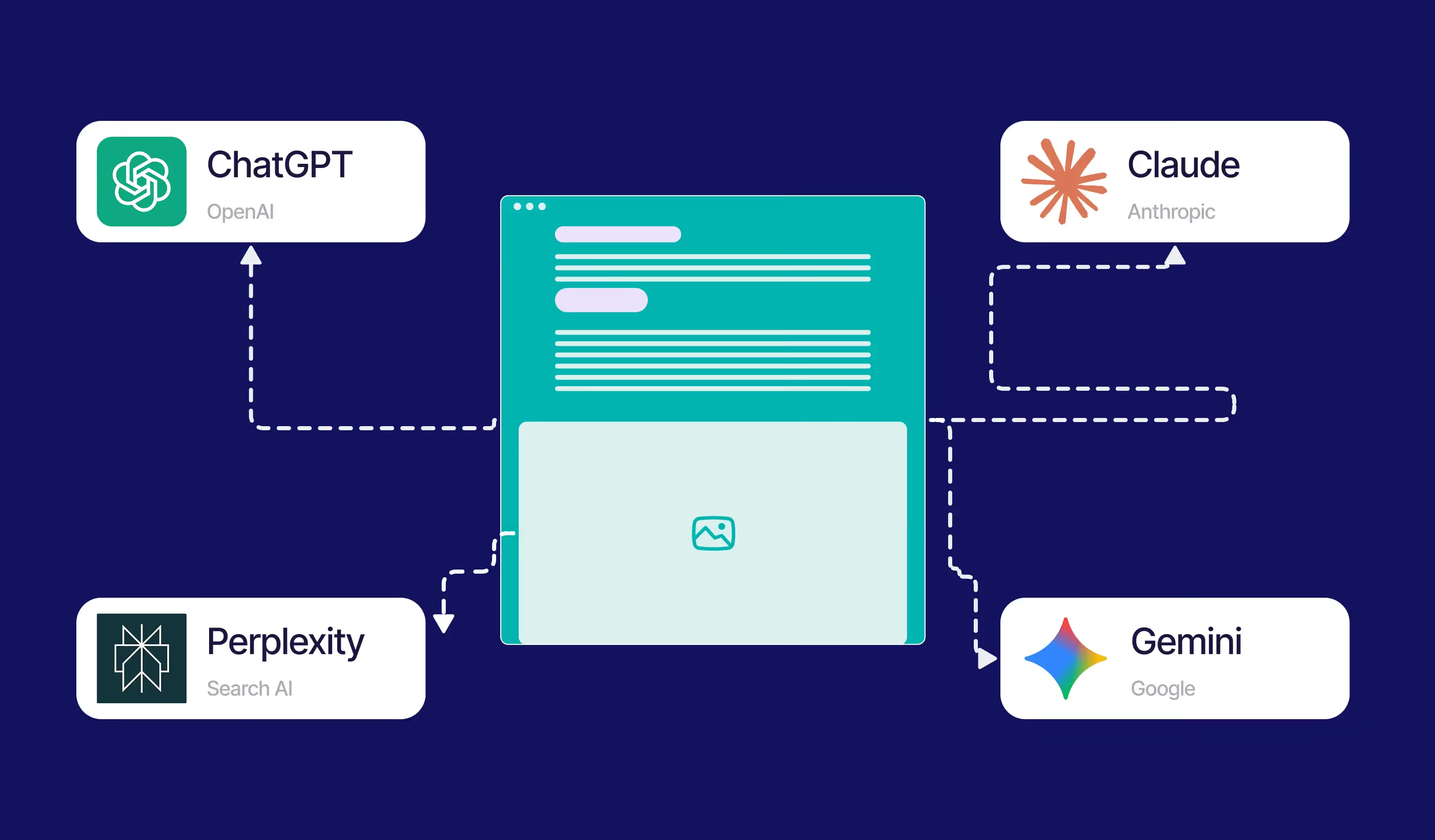
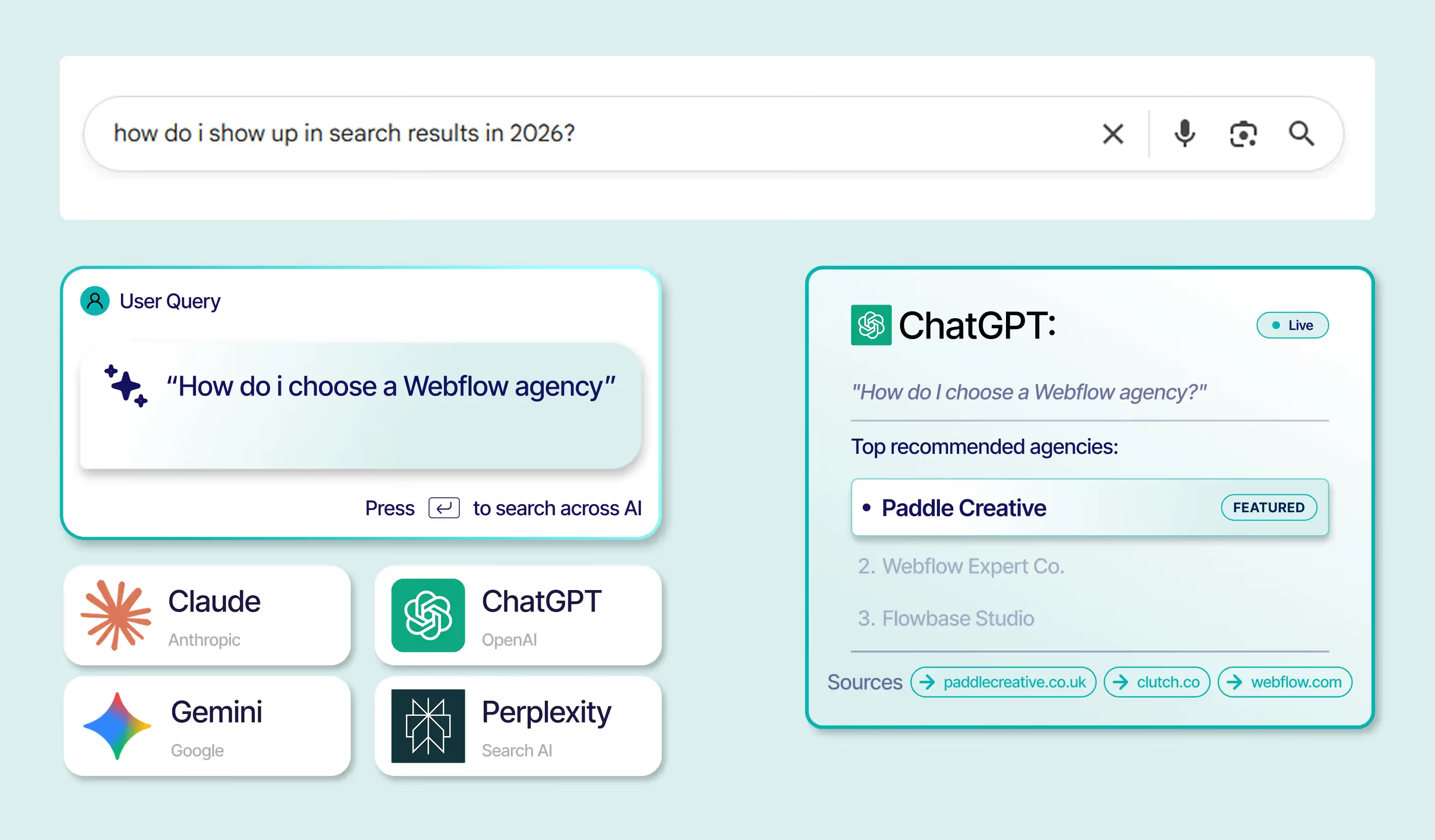
More buyers now ask ChatGPT, Perplexity or Claude for a shortlist before they open a single website. Those tools build their answers from what's written about you, on your own site and elsewhere, so a fuzzy brand gets a fuzzy description.
Clear positioning helps here more than any trick. Describe what you do in the same plain words on your homepage, LinkedIn page, directory listings and case studies, and the AI tools have a much easier job. A direct answer near the top of your key pages helps too, because these tools tend to quote pages that answer the question clearly.
Ask a few AI tools about your category every quarter, and note whether you appear and how you're described. If the answer sounds like your competitor's homepage, your positioning needs work. The AI search optimisation team at Paddle Creative can show you where you stand.
10. How do you roll out a new brand without confusing buyers?
Roll it out in the order buyers meet you, starting with what sales and prospects touch every day. Then let the long tail follow over a few weeks.
Tell your own team first. Nothing deflates a launch like a salesperson sending the old deck on day two, or a footer that still shows last year's logo. If your name or domain is changing too, plan the redirects with your website team well before launch day. That keeps the search traffic you've already earned.
- Website, favicon, social cards and email templates
- Sales deck, proposal template and case studies
- LinkedIn company page and team banners
- Email signatures and calendar invites
- Product screens and onboarding emails
- Ads, events and print as each one comes up
11. How do you know if your brand is working?
Brand building is slow, yet a LinkedIn survey in the Binet and Field report found only 4% of B2B marketers measure impact beyond six months (LinkedIn B2B Institute, 2019). So set a baseline before launch, then check the same signals every quarter, because they move when more people remember you.
- Branded search in Google Search Console
- Direct traffic and returning visitors
- Win rate and sales cycle on qualified deals
- How AI tools describe you when buyers ask
- "We saw your post" in discovery calls
The last one is the most fun to track and the hardest to fake. When prospects start quoting your own lines back to you, the brand is doing its job.
Ready for a brand that fits the company you've become? Let's build the brand nobody can copy. Book your strategy call.
Sources
- The 95-5 rule, LinkedIn B2B Institute with the Ehrenberg-Bass Institute (2021)
- 6sense 2025 Buyer Experience Report announcement, Business Wire (2025)
- The 5 Principles of Growth in B2B Marketing, Les Binet and Peter Field for the LinkedIn B2B Institute (2019)
- Understanding SC 1.4.3 Contrast (Minimum), W3C WCAG 2.2 (2023)
Author
Fact Checked By