
.svg)

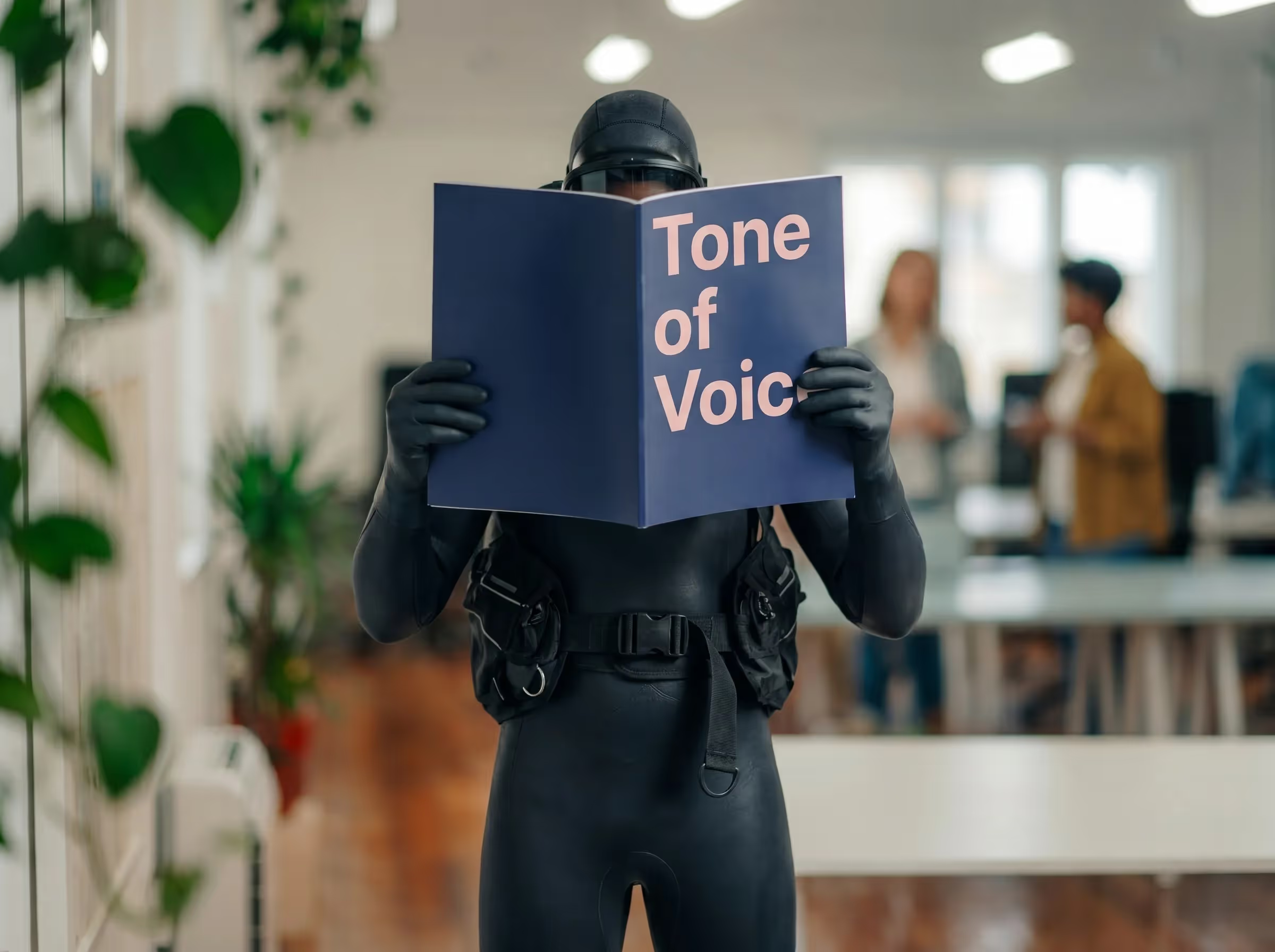
- A detailed tone of voice document is essential for training AI to produce authentic, brand-consistent content that sounds like you
- Most brands have weak, generic guidelines that leave AI writing corporate fluff instead of distinctive content
- Your tone of voice should include specific examples, banned phrases, sentence structure rules, and personality traits with real context
- AI tools trained on detailed brand voice documentation can produce content that rivals human-written copy
- Without proper voice documentation, you're just getting vanilla AI output that could come from any brand
- Document your brand personality with specific traits and examples
- Define writing rules, banned phrases, and preferred language patterns
- Include real examples of good and bad content for your brand
- Test your guidelines with AI tools and refine based on output quality
- Train your team to use these guidelines consistently across all AI interactions
Quick answer
A tone of voice document gives AI the instructions and concrete examples it needs to sound like you. Without it, you get generic corporate speak that could come from any company.
1. What is a tone of voice document?
A tone of voice document is a detailed guide that defines how your brand communicates across every touchpoint. It goes past basic personality traits. It includes specific language rules, banned phrases, sentence structures, and real examples of your voice in action.
Think of it as an instruction manual that makes sure anyone, human or AI, can write content that sounds like you. The best tone of voice documents include concrete examples, not just abstract concepts.
2. Why most tone of voice documents fail with AI
The short answer: most tone of voice documents are marketing fluff. They are full of abstract concepts like "friendly but professional" or "innovative and trustworthy". Meaningless words that tell AI nothing useful.
AI needs specifics. It needs to know that you start sentences with "And" or "Because" when it works naturally. It needs to know you use full stops for punch, not flowery language for padding. It needs examples of what good and bad content looks like for your brand.
Generic guidelines produce generic content. And generic content is the enemy of effective marketing.
Your tone of voice doc might be letting your team down, and your AI tools too. We help ambitious brands build voice guidelines that work for humans and machines alike.

3. The anatomy of an AI-ready tone of voice document
3.1 Brand personality with context
Don't just say "playful". Show what playful means for your brand. Does it mean gentle humour or provocative wit? Does it mean casual language or clever wordplay? Give AI concrete examples to work with.
At Paddle Creative, our "Provocatively Playful" personality means we question marketing wisdom in plain, direct language. We will say "Here's the uncomfortable truth" instead of "Research suggests" when making a bold point. That distinction matters for content quality.
3.2 Specific writing rules
Your AI needs granular instructions. Sentence length limits (keep under 25 words for clarity), preferred punctuation, banned corporate speak, acceptable contractions. The more specific, the better the output.
Include rules about flow and rhythm. If you prefer short, punchy sentences, specify maximum lengths. If you mix long and short for emphasis, explain the pattern with concrete ratios.
3.3 Voice and banned phrases
Create lists of words and phrases your brand would never use. "Leverage", "utilise", "cutting-edge", "best-in-class": ban them explicitly. AI loves corporate jargon unless you tell it otherwise.
Replace banned phrases with preferred alternatives. Don't just say avoid "utilise", specify "use" instead. Give AI better options, not just restrictions.
4. How to test your tone of voice with AI
4.1 The prompt test
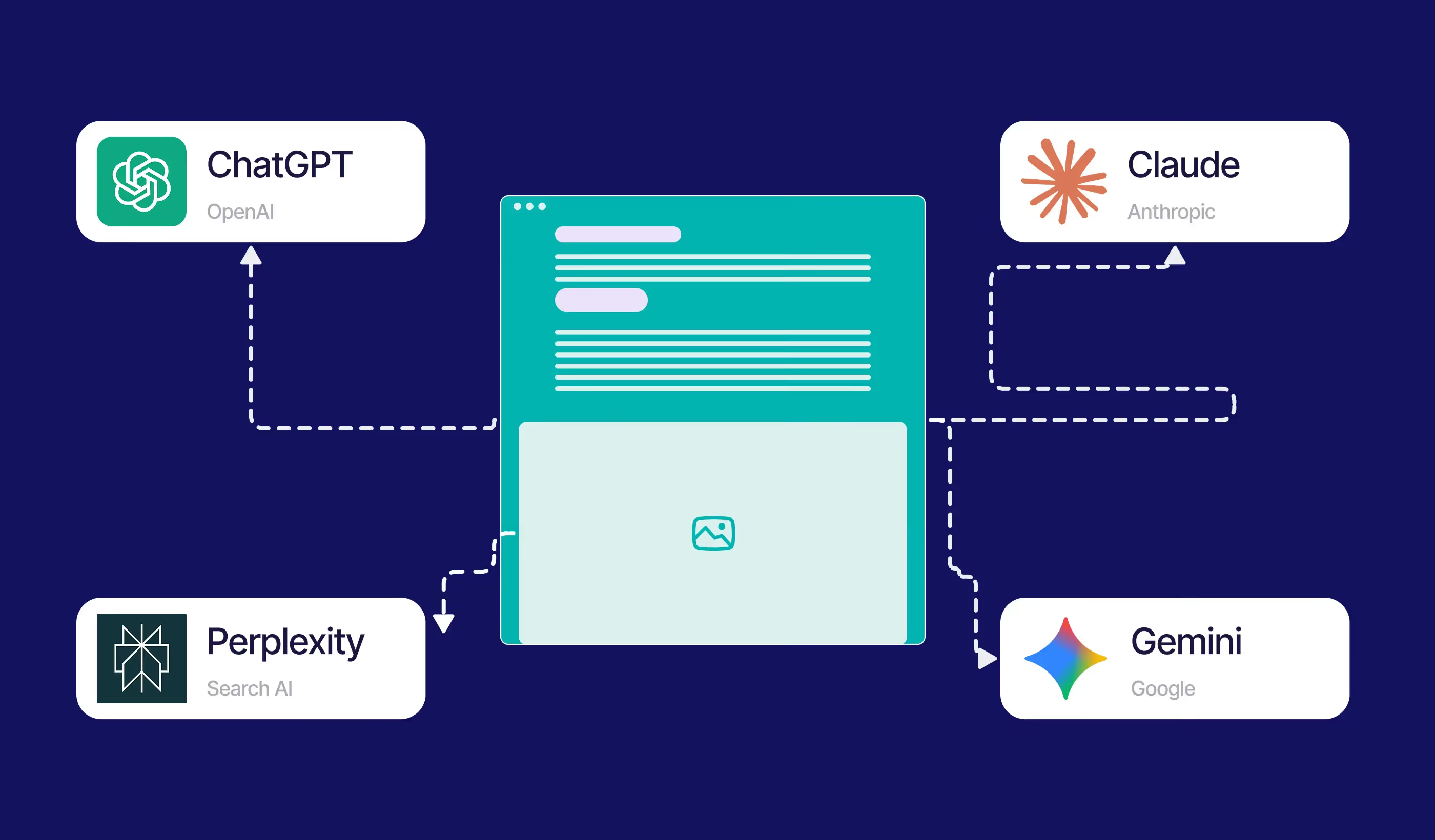
Feed your tone of voice document to ChatGPT, Claude, or your preferred AI tool. Ask it to write three different pieces of content: an email, a social post, and a blog introduction. Does the output sound like your brand?
If the AI produces generic corporate speak, your guidelines aren't specific enough. If it captures your voice accurately, you're on the right track. Tools like our AI Engine go further. They wire your brand voice into your planning, drafting and reporting, so the whole workflow runs consistently, not just one-off prompts.
4.2 The comparison test
Take existing content your team has written and ask AI to rewrite it in your tone of voice guidelines. Compare the outputs. Are they consistent? Do they feel authentic to your brand?
This test reveals gaps in your documentation. Where the AI gets it wrong, your guidelines need more detail.
Paddle Creative insight: The brands with the best AI content don't get there on the first prompt. They spend a few weeks testing output and tightening their guidelines until the AI consistently sounds like them.
5. Real examples that make the difference
5.1 Show, don't just tell
Instead of "Write in a conversational tone", show what conversational means for your brand. Include examples of good headlines, email subject lines, and social posts. Show what bad content looks like too.
Contrast is powerful. When AI sees the difference between your brand voice and generic alternatives, it learns to replicate the distinction.
5.2 Context-specific guidelines
Your tone might shift slightly between email marketing and thought leadership content. Document these nuances with specific examples. AI can handle context-specific voice variations if you're clear about when to use each approach.
Don't assume AI will intuitively know that your LinkedIn posts should be more formal than your email newsletters. Spell it out with concrete examples for each channel.
6. Training your team to use voice-guided AI
6.1 Consistent prompting strategies
Train your team to include tone of voice guidelines in every AI prompt. Make it a standard practice, not an optional extra. The most effective teams develop prompt templates that automatically include voice guidance.
Document specific prompts that work well for different content types. Share successful examples across your team to maintain consistency. If you want to move beyond ad hoc prompting, our AI Engine handles the planning, drafting and reporting loops, so your team focuses on strategy and the calls only a human can make.
6.2 Quality control processes
Establish review processes for AI-generated content. Even with perfect guidelines, AI occasionally misses the mark. Human oversight keeps quality high and helps you spot where your documentation needs work.
Create feedback loops. When AI produces content that doesn't match your voice, trace it back to gaps in your guidelines and update accordingly.
Paddle Creative insight: The brands seeing the biggest return from AI content treat their tone of voice document as a living resource. They update it as they learn, not once a year. The ones who write it and forget it get far less out of every tool they touch.
7. Common mistakes to avoid
7.1 Being too abstract
Avoid personality descriptors without concrete examples. "Friendly" means nothing to AI without context. Show what friendly looks like in your headlines, your email sign-offs, your error messages.
Abstract guidelines are interpretation traps. What seems obvious to you might be meaningless to AI.
7.2 Forgetting about structure
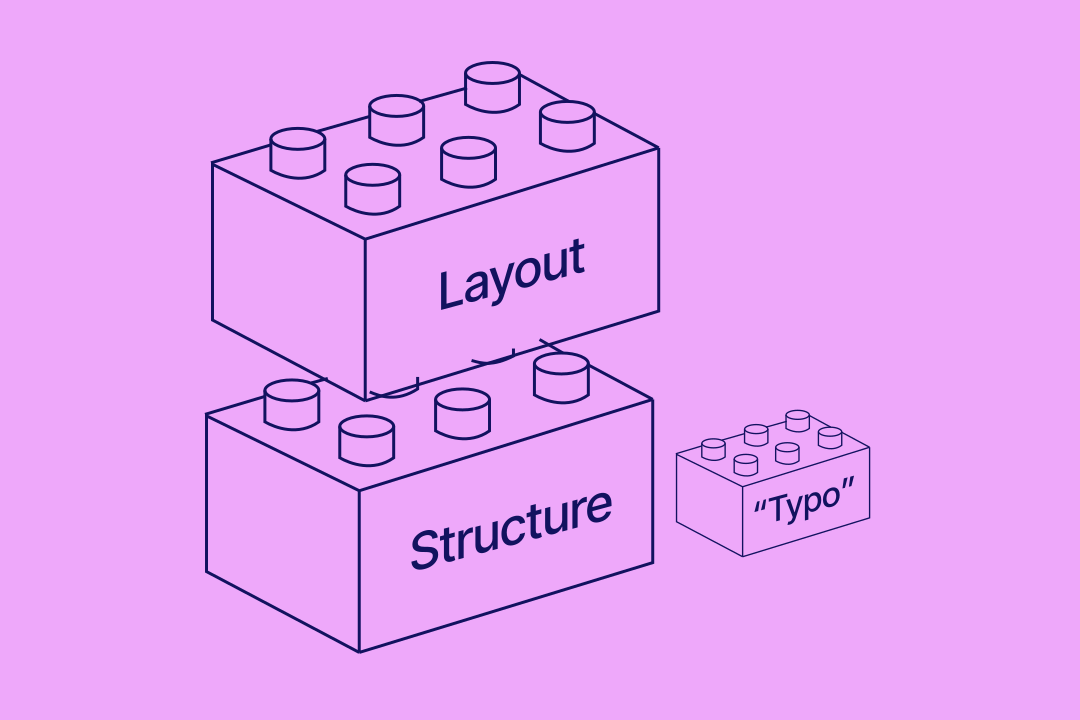
Voice isn't just about word choice. It's about rhythm, paragraph length, and content structure too. If you prefer short paragraphs (under 3 sentences), document it. If you use questions to engage readers, make it explicit.
AI needs to understand your content architecture, not just your vocabulary preferences.
8. Measuring tone of voice success with AI
Track consistency across AI-generated content. Are your social posts, emails, and blog content keeping the same voice? Inconsistency suggests gaps in your documentation.
Monitor engagement metrics. Content that truly captures your brand voice should perform like human-written content. If AI content underperforms consistently, your guidelines need work.
Survey your audience. Do they notice when content is AI-generated? If your voice guidelines are working, your audience should not be able to tell.
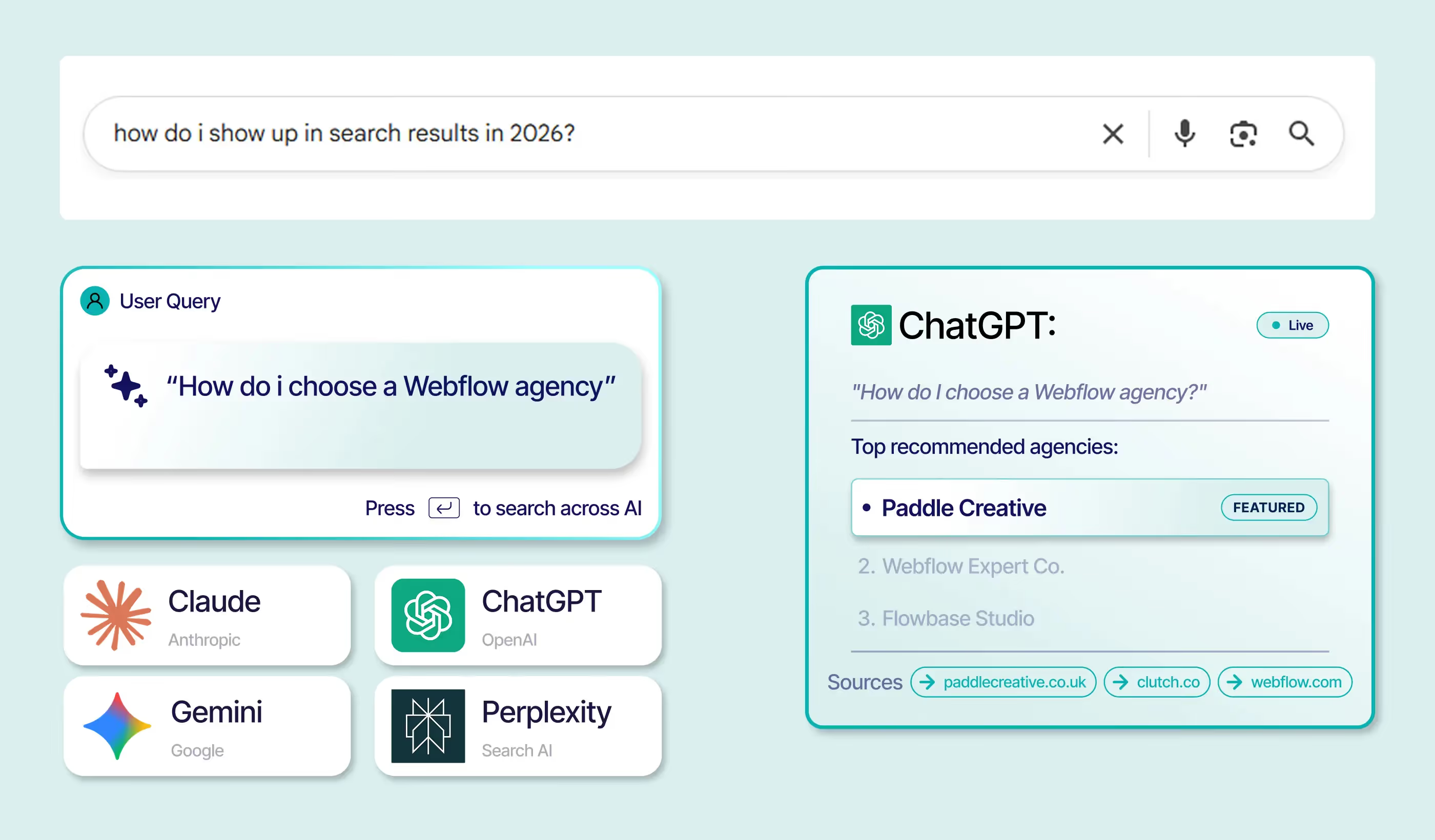
And if you're thinking about how your brand shows up not just in human search but in AI-generated answers, that's a separate but equally important challenge. Our guide on AEO and GEO explains how to structure your content so tools like ChatGPT, Perplexity, and Google AI Overviews actually surface your brand.
Build a brand voice that works for humans and machines
You've seen why most brands struggle with AI content. Their tone of voice documentation isn't built for the job. If you want guidelines that actually guide, let's talk.
Key concepts
Tone of voice document: A detailed guide defining how a brand communicates, including personality traits, writing rules, banned phrases, and specific examples for consistent content across every channel.
Brand voice consistency: Keeping a uniform style and personality across all content, measured through consistency scoring and audience feedback.
AI prompting: Giving AI specific instructions and context to generate the content you want, including tone of voice guidelines, structural preferences, and concrete examples.
Voice guidelines: The rules and preferences that govern how a brand communicates: banned phrases, preferred structures, sentence length limits, and personality traits with context.
Content architecture: The structural elements of content, including paragraph length, heading styles, bullet point usage, and formatting, that define how information is organised and presented.
Glossary
Abstract guidelines: Vague personality descriptors without concrete examples that fail to give AI actionable direction.
Brand voice variations: Context-specific adjustments to tone of voice for different channels or content types, while keeping core brand personality.
Prompt templates: Pre-formatted instruction sets that include tone of voice guidelines for consistent AI content across team members.
Voice documentation testing: The iterative process of refining tone of voice guidelines based on AI output quality and consistency.
- Specific, detailed tone of voice guidelines with concrete examples are essential for quality AI content
- Most existing brand voice documents are too abstract for AI to interpret
- Include concrete examples, banned phrases, and structural preferences in your guidelines
- Test your documentation with AI tools and refine based on output quality
- Train your team to use voice guidelines consistently in all AI interactions
- Treat tone of voice documentation as a living resource that evolves with your brand
Author
Fact Checked By

%20(1).avif)



.avif)



.avif)

%20(1).avif)
%20(2).avif)
%20(1).avif)
.avif)
.avif)
%20(1).avif)
.avif)
.avif)
.avif)
.avif)
.avif)
.avif)
%20(1).avif)
.avif)
%20(1).avif)

.avif)

%20(1).avif)
%20(1).avif)
%20(1).avif)









%20(2).avif)
.avif)


.avif)

.avif)
.avif)
.avif)
.avif)
.avif)
.avif)
.avif)
%2520(1).avif)
%2520(1).avif)
.avif)
%2520(1).avif)
%2520(1).avif)
%2520(1).avif)
%2520(1).avif)
%2520(1).avif)
%2520(1).avif)
.avif)
.avif)

.avif)


