
.svg)
%20(1).avif)

- AI Overviews now appear in roughly 25% of Google searches – businesses that don't optimise for AI-generated answers are losing visibility to competitors who do
- AEO, GEO, and LLM Visibility are three distinct but overlapping strategies that determine whether AI tools find, understand, and cite your content
- Webflow's clean semantic code, flexible CMS, and built-in schema controls make it one of the strongest platforms available for AI search optimisation
- AI systems prioritise unique insight over volume – content that simply repeats what's already online has low Information Gain and is rarely cited
- Optimising for AI search is a technical and content infrastructure shift, not a one-off task – structure, schema, speed, and originality all compound over tim
Introduction
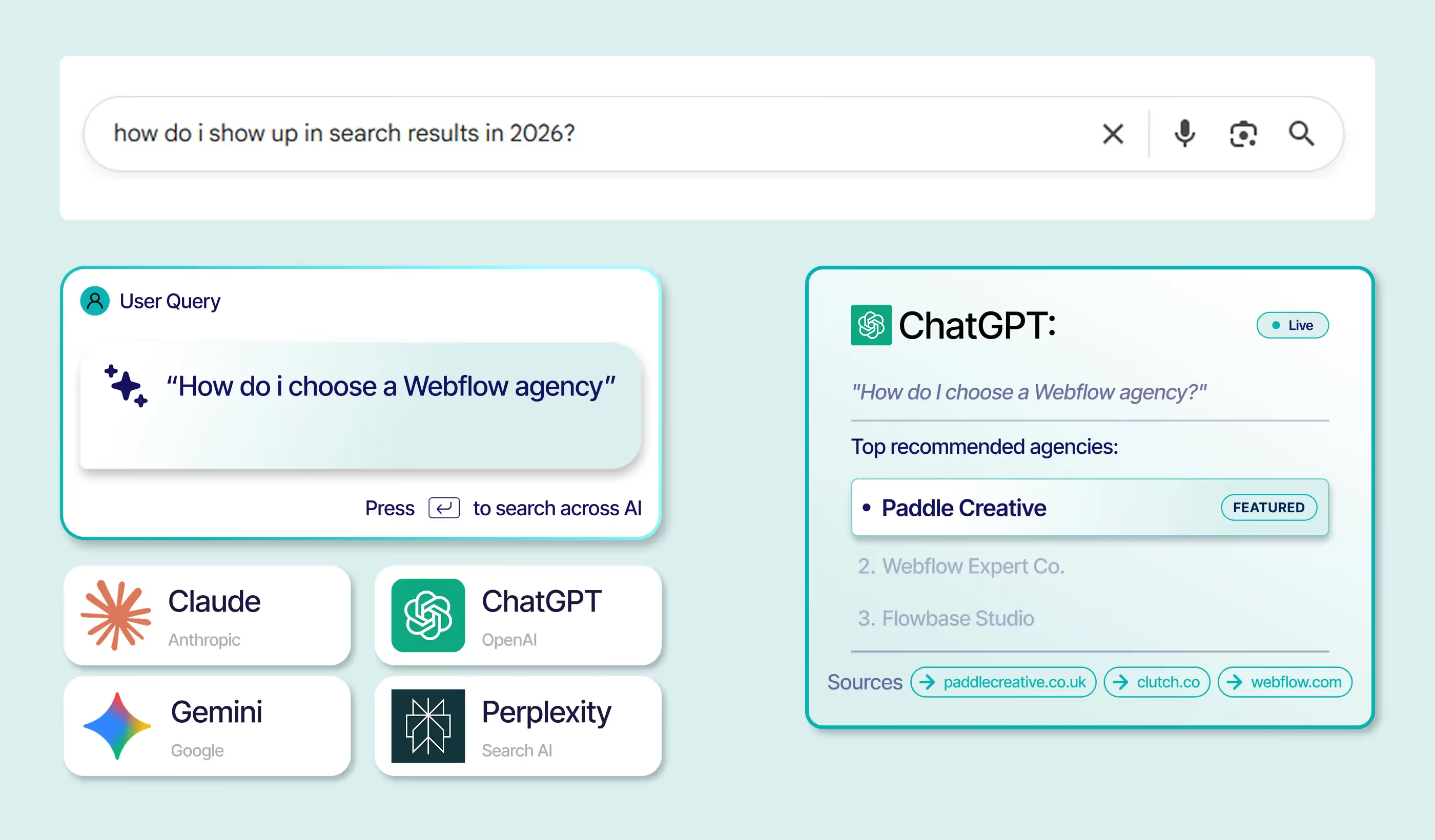
Wondering how Webflow agencies optimise sites for AI search – and what it actually takes to get your brand cited in tools like ChatGPT, Perplexity, and Google AI Overviews? The answer comes down to structure, schema, and original insight. AI tools don't rank pages – they synthesise answers from content they can read, trust, and extract. If your site isn't built for that, it won't be referenced.
This guide covers exactly how Webflow agencies approach AI search optimisation – from content architecture and schema markup to technical performance and Information Gain – and what you need to do to become the source AI systems cite.
Quick Answer: How do Webflow agencies optimise websites for AI search?
Webflow agencies optimise websites for AI search by structuring content around real user questions, adding schema markup, improving technical performance, and strengthening internal linking. All of these steps ensure AI systems can accurately interpret, summarise, and reference website content in conversational results and AI-generated overviews.
Quick Steps: How to optimise your Webflow site for AI search – in 6 steps
- Structure content around real user questions – reframe headings and sections as the prompts your audience actually types into AI tools
- Implement schema markup – add Article, FAQ, HowTo, and Organisation schema to give AI crawlers a machine-readable layer on top of your content
- Improve technical performance – fast load times, clean HTML, and strong Core Web Vitals are trust signals AI systems use to assess citation-worthiness
- Build internal topic clusters – link related content around core themes so AI models recognise your site as a subject matter authority, not just a single page
- Add unique data and insight – first-party statistics, case study evidence, and counter-intuitive observations give AI systems a reason to cite you over a competitor saying the same thing
- Optimise for multi-modal search – add descriptive alt-text, VideoObject schema, and high-contrast imagery so your visual assets are as discoverable as your text
What Is AI Search Optimisation?
AI search optimisation focuses on making website content easier for AI models to understand, summarise, and reference when generating answers. Unlike traditional SEO, which focuses heavily on keywords and rankings, AI search optimisation focuses on answering real user questions, structuring information clearly, providing authoritative expertise, and making content easily extractable by AI systems.
Three concepts underpin modern AI search optimisation:
1. Answer Engine Optimisation (AEO)
AEO focuses on optimising content so it can appear as direct answers in AI assistants and voice search tools.
2. Generative Engine Optimisation (GEO)
GEO ensures content is structured so generative AI tools can interpret and summarise information accurately.
3. LLM Visibility
The focus is on improving how well large language models (LLMs) recognise and reference your website’s content when generating responses.
Find out where you stand, and what it takes to get your brand in the answer.

Why Webflow Is Well-Suited for AI Search
- Clean Semantic Code: Webflow produces well-structured HTML that is easier for search engines and AI crawlers to interpret.
- Fast Performance: AI systems favour websites that deliver fast load times and a good user experience.
- Flexible CMS: Webflow allows agencies to create structured content libraries that support AI-friendly blog posts and knowledge resources.
- Built-In SEO Controls: Metadata, schema markup, and page structure can all be easily managed within Webflow.
Paddle Creative Insight: At Paddle Creative, we often find that Webflow’s clean code output and flexible CMS make it easier to implement AI-friendly content structures compared with many traditional CMS platforms.
How Webflow Agencies Optimise Sites for AI Search
1. How do agencies structure content around questions and prompts?
AI systems prioritise content that answers natural language questions. Agencies structure blog posts and guides around prompts such as: "How does AI search work?" or "What makes a website AI-friendly?"
2. Why is creating structured, scannable content vital for AI?
AI systems extract information more easily when content is clearly structured. Agencies improve readability using logical heading hierarchies, short paragraphs, and clear topic sections.
3. How do agencies implement schema markup for AI?
Structured data helps AI systems understand the content of pages. Common types include Article, FAQ, HowTo, and Organisation schema. These signals increase the likelihood that they will appear in AI-generated answers.
4. How does technical performance impact AI search visibility?
Webflow agencies improve page load speed, mobile performance, and internal linking. Fast websites send strong quality signals to search engines and AI systems.
5. How do agencies strengthen authority and brand signals?
AI systems prioritise credible sources. Agencies strengthen authority through expert-led content, case studies, and thought leadership.
Paddle Creative Insight: We’ve seen clients rank #1 organically but get ignored by AI Overviews because they lacked unique data. In our experience, AI models frequently bypass top-ranking pages in favour of sites with higher "Information Gain" and verified brand authority.
6. Why is internal linking important for AI search?
Internal links help AI models understand topic expertise. Agencies build content hubs linking related articles around core topics like "Webflow SEO" or "AI Search Optimisation."
7. How does evergreen educational content improve AI citations?
AI systems frequently reference informational guides, how-to tutorials, and industry explainers.
8. How do agencies use the "Information Gain" framework?
In 2026, AI engines heavily penalise "regurgitated" content. If your blog says exactly what the top 10 results already say, an LLM has no reason to cite you.
Webflow agencies now focus on Information Gain, which means integrating unique data, proprietary case studies, and contrarian viewpoints into the Webflow CMS. By providing the "missing piece" of a topic's puzzle, your website becomes a primary reference point that AI models must cite to provide a complete answer to the user.
9. How do you optimise for Multi-Modal AI search?
AI search isn't just text anymore; models now "see" and "hear" your website. Agencies optimise Webflow assets for multi-modal discovery by:
- Image AEO: Using descriptive, context-rich alt-text that serves as a direct answer to visual queries.
- Video Schema: Wrapping Webflow video elements in VideoObject schema with specific timestamps, allowing AI Overviews to deep-link directly to the relevant second of a video.
- Visual Clarity: Ensuring high-contrast, clear imagery that AI vision models can accurately identify and describe.
10. How does the automated FAQ schema provide a technical edge?
To bridge the gap between human-readable content and machine-readable data, agencies use Webflow’s CMS to automate the technical layer. By using custom code snippets in the footer, we can dynamically generate JSON-LD schema from CMS fields. This allows an FAQ accordion to be instantly "digested" by an AI engine as a verified fact, significantly increasing the chances of the brand being featured as the definitive answer.
How AI Search Is Changing SEO Strategy
Key Concepts
Answer Engine Optimisation (AEO) The practice of structuring content to appear as a direct answer in AI assistants, voice search tools, and featured snippet boxes. AEO prioritises brevity, factual accuracy, and formats like Q&A pairs and structured lists that allow AI systems to extract and surface a response without the user needing to click through to the source.
Generative Engine Optimisation (GEO) The process of optimising content so that large language models and generative AI systems cite your brand as a trusted authority when synthesising complex answers. GEO relies on semantic clarity, structured data, topical depth, and consistent expert-level content that AI models can reliably reference across multiple queries.
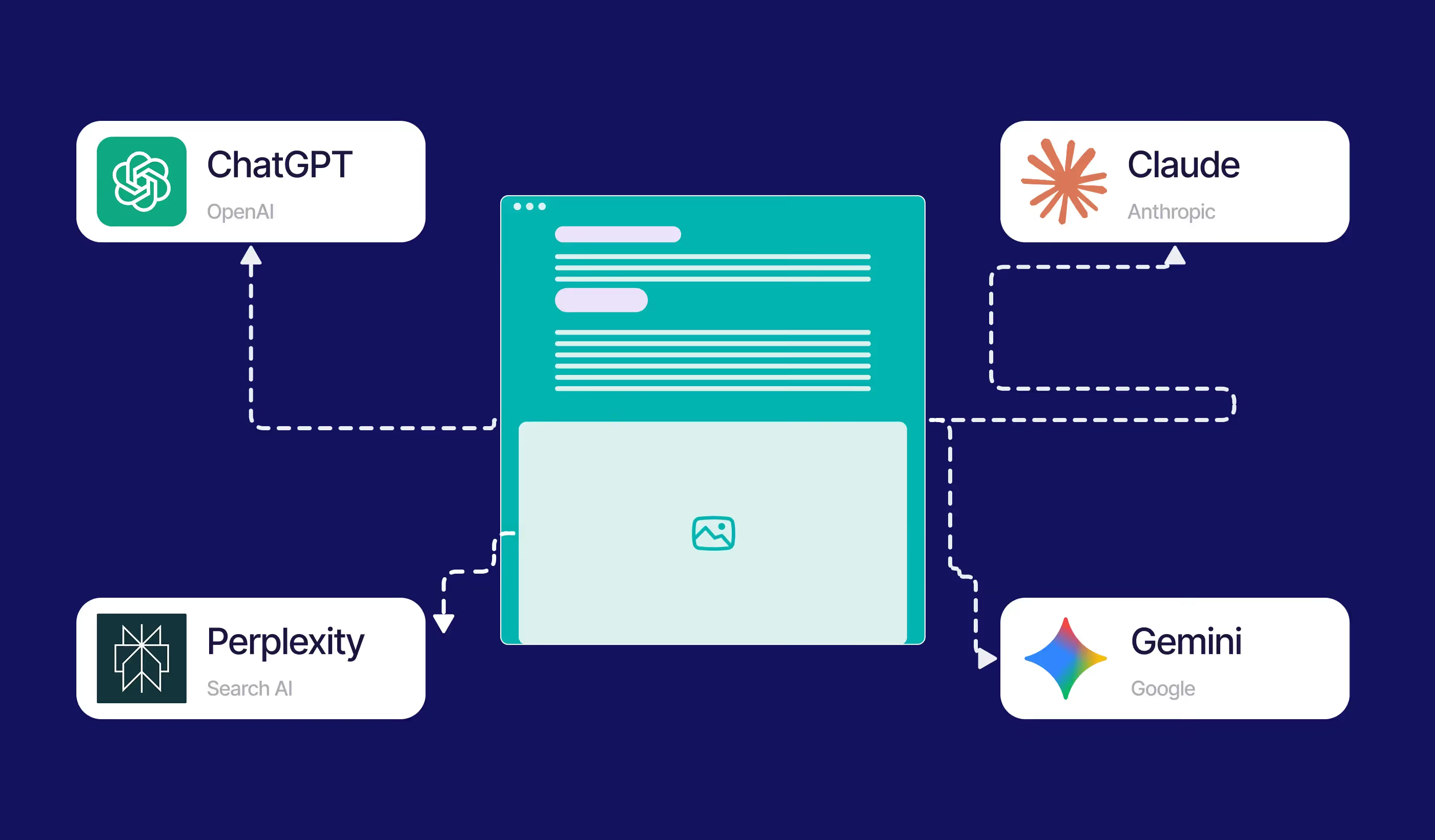
LLM Visibility The degree to which large language models – including ChatGPT, Gemini, and Claude – recognise, understand, and reference your website's content when generating responses. High LLM visibility is achieved through clean code, clear entity signals, authoritative authorship, and content that provides unique value beyond what is already widely available online.
Information Gain The degree to which content provides unique, non-derivative value that AI systems cannot find elsewhere. Content that repeats widely available information scores low on information gain and is rarely cited. First-party data, proprietary case study evidence, and counter-intuitive insights all increase information gain and improve citation frequency.
Multi-Modal AI Search The capability of AI systems to interpret and reference not just text, but also images, video, and audio content. Optimising for multi-modal search means ensuring images have descriptive, context-rich alt-text, videos are wrapped in VideoObject schema with timestamps, and visual assets are clear enough for AI vision models to accurately identify and describe.
Citation Authority The status a brand achieves when AI systems consistently reference it as a primary source when generating answers in a given topic area. Citation authority is built through a combination of structured content, schema markup, unique insight, technical performance, and a consistent body of expert-led content that AI models learn to trust over time.
Author
Fact Checked By





.avif)


.avif)


%20(1).avif)
%20(2).avif)
%20(1).avif)
.avif)
.avif)
%20(1).avif)
.avif)
.avif)
.avif)
.avif)
.avif)
.avif)
%20(1).avif)
.avif)
%20(1).avif)

.avif)

%20(1).avif)
%20(1).avif)
%20(1).avif)






%20(2).avif)
.avif)


.avif)

.avif)
.avif)
.avif)
.avif)
.avif)
.avif)
.avif)
%2520(1).avif)
%2520(1).avif)
.avif)
%2520(1).avif)
%2520(1).avif)
%2520(1).avif)
%2520(1).avif)
%2520(1).avif)
%2520(1).avif)
.avif)
.avif)

.avif)


