
.svg)

- Cost Reality: Webflow site builds in 2026 generally range from £2,000 to £80,000+ ($2,500–$100,000+).
- The Growth Factor: The real cost of Webflow isn’t the build – it’s choosing the wrong level of investment for your specific growth stage.
- Agencies vs. Freelancers: Freelancers are ideal for tactical execution; Agencies are essential for strategic, enterprise-grade scalability.
- Avoid Technical Debt: Starting "cheap" only works if the initial architecture is built for future expansion.
- Hidden Costs: Budget an additional 15–20% for custom integrations, content strategy, and advanced SEO.
1. How much does a Webflow website actually cost in 2026?
In 2026, a Webflow site is an investment in a high-performance growth engine. While "cheap" options exist, enterprise-grade brands now prioritise speed-to-market and technical scalability. Based on Paddle Creative’s delivery experience with UK, EU, and US clients, the budget is typically split into three tiers:
Simple Projects (Portfolios & Landing Pages)
Ideal for startups or consultants needing a professional footprint quickly.
- Features: 1–5 pages, basic animations, template-based or light customisation.
- Cost: £3,000 – £8,000 ($4,250 – $10,000).
Mid-Range Projects (Growth-Stage Businesses)
Designed for companies requiring a robust CMS, lead generation, and moderate customisation.
- Features: 6–15 pages, CMS setup for blogs/services, custom interactions, and API integrations.
- Cost: £5,000 – £20,000 ($6,500 – $25,000).
Complex & Enterprise Projects (Scalable Custom Solutions)
For high-traffic brands requiring deep integrations (CRMs, ERPs), multi-language support, and custom-coded logic.
- Features: 20+ pages, complex data structures, advanced SEO, and high-fidelity animations.
- Cost: £25,000 – £80,000+ ($29,000 – $100,000+).
Who this page is for: Marketing Managers, Founders, and Procurement Teams looking for realistic, experience-led pricing.
Who this page is NOT for: Those looking for "quick-fix" $200 sites that ignore long-term SEO and performance.
2. Why do Webflow sites cost more than basic templates?
A common query is: "Why should I spend £10k when a template is £100?" The answer lies in the commercial value of the build.
- Performance & Conversion: Custom-built Webflow sites are architected for Core Web Vitals. A 0.1s improvement in speed can increase conversions by 8%, easily covering the build cost within months.
- Scalability: Templates often suffer from "technical debt" – cluttered code that makes it difficult to add features later without a full rebuild.
- Brand Uniqueness: In a saturated market, a template-based site makes you look like your competitors. A custom build ensures your brand stands out and builds immediate trust.
Paddle Creative Insight: AI-driven design is taking hold. The trouble is, it all looks the same, and so will your brand if you use it without an expert UI/UX designer.
What are you actually paying for in a professional build? When you hire a Webflow Premium Partner, your budget is distributed across critical workstreams that a freelancer or template setup usually skips:
- 20% Strategy & Discovery: Planning sitemaps, user journeys, and SEO content silos.
- 30% UX/UI Design: Custom visuals built for high conversion and accessibility.
- 30% Technical Development: Building a "clean code" architecture using frameworks like Client-First.
- 20% QA & Launch: Rigorous testing across 15+ device combinations and SEO migration checks.
Paddle Creative Insight: The Rebuild Trap - In our audits, we typically see that 40% of mid-market companies who "started cheap" with a junior freelancer or DIY template end up spending double to rebuild the site correctly within 12 months. Investing in the right architecture early prevents this "false economy."
3. The "Cost of Delay": Why a cheap site might be costing you thousands
Most budget guides focus only on what you spend. They miss what you lose when you choose a slower or lower-quality option. In 2026, the opportunity cost of a poor website is higher than ever.
- Lost Lead Generation: If a "cheap" freelancer takes 4 months to build a site that an agency could launch in 2, you lose 60 days of lead generation. If your average lead is worth £500 and you get 1 per day, that "savings" just cost you £30,000 in lost revenue.
- The Conversion Gap: A site with poor Core Web Vitals (common in cheap builds) has a significantly higher bounce rate.
- The Rebuild Tax: 40% of our mid-market clients come to us to rebuild a site that was built incorrectly the first time. Starting with the right investment saves you from paying for the same website twice.
Case Study: Turning Technical Debt into a 760% Growth Engine
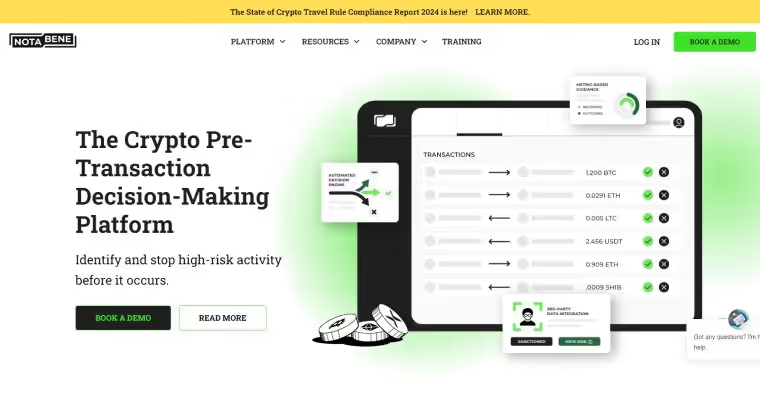
Client: Notabene (The leader in Crypto Travel Rule Compliance)
Challenge: Rapid growth meant their existing site no longer reflected their enterprise-level status. Performance issues, slow load times, and poor mobile responsiveness were hindering their ability to close global enterprise deals.
The Paddle Creative Strategy:
- Enterprise Re-Skin: Finessed the design of the homepage and product pages to communicate authority and trust to global financial institutions.
- The "Client-First" Standard: Rebuilt the site architecture from the ground up using the Client-First class-naming convention. The result ensured the site was finally scalable, easily maintainable, and lightning-fast.
- Performance Engineering: Targeted fixes for speed and responsiveness to ensure a seamless experience for high-stakes enterprise visitors.
The Outcome:
"The upgraded Webflow site became a catalyst for massive scale. Post-launch, Notabene achieved a monthly transaction volume increase of 760% YoY, cementing their position as the undisputed leader in their sector."
4. What are the ongoing Webflow hosting and subscription fees?
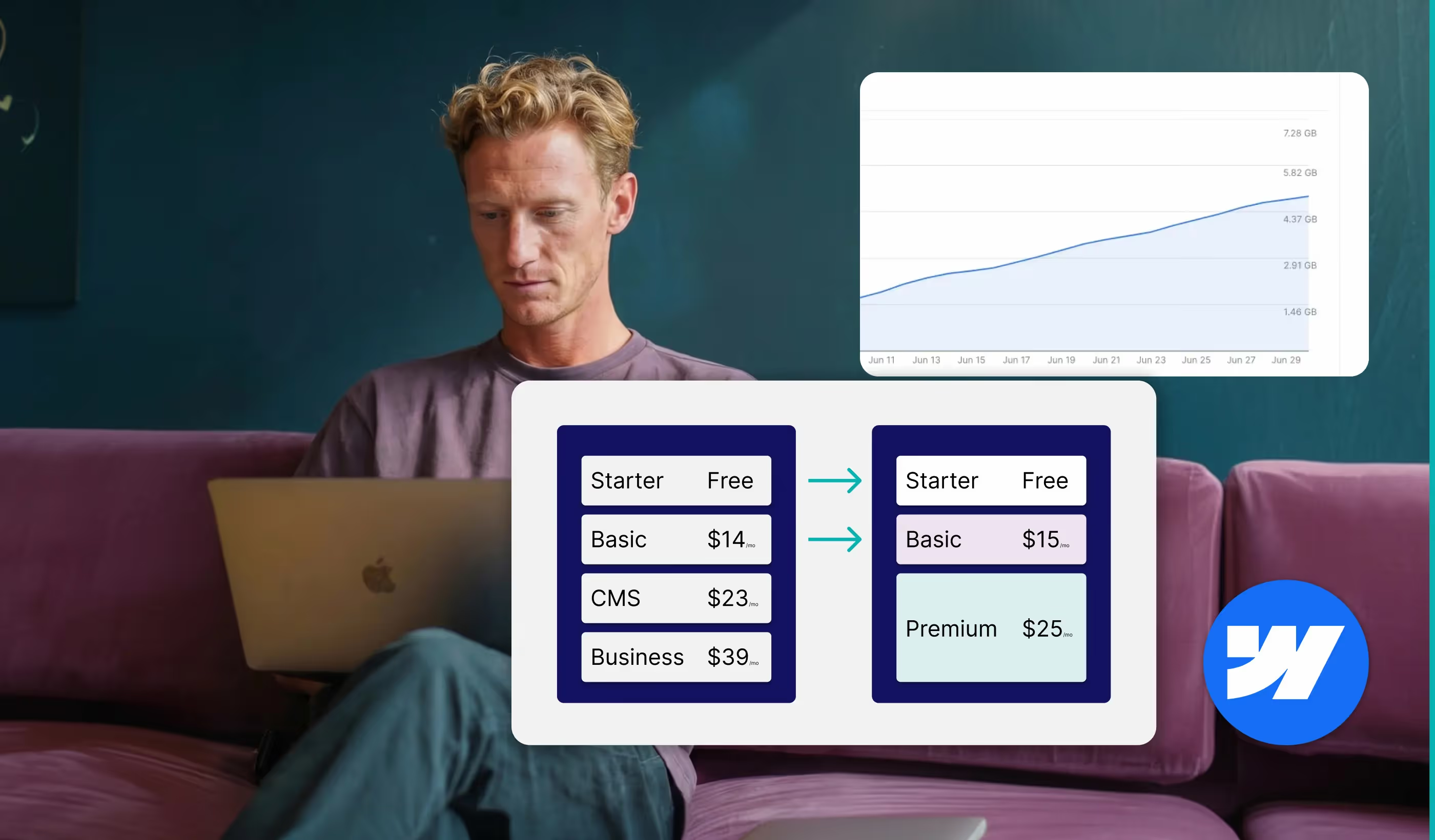
Webflow's hosting includes the CDN, SSL, and security, removing the need for separate server management.
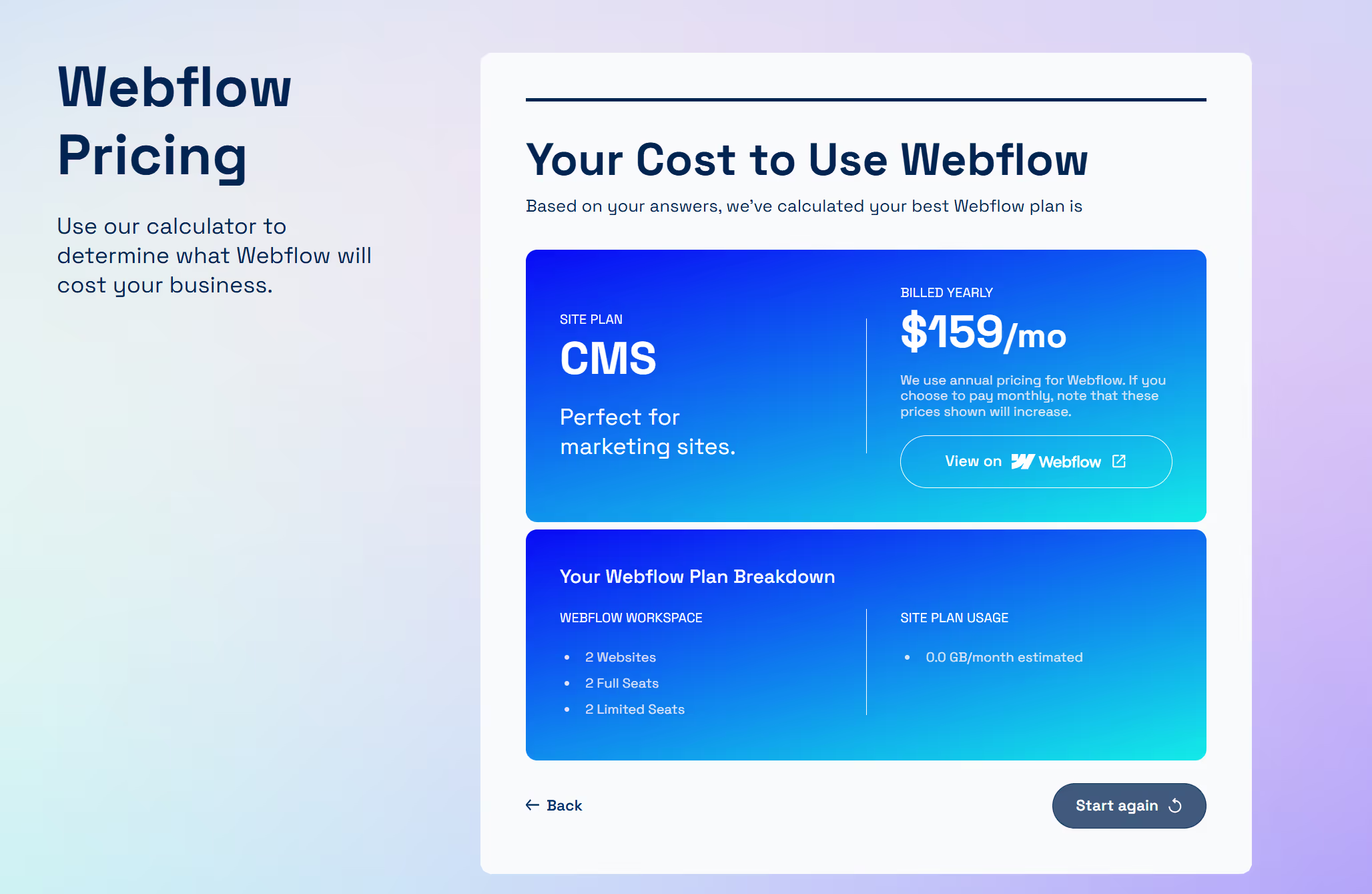
Note: E-commerce plans range from ~£32 to ~£180 ($42–$235) per month, depending on volume. To find your exact needs, use our Webflow Pricing Calculator.
5. Is it cheaper to hire a Webflow agency or a freelancer?
The choice depends on the complexity of your growth goals, not just the initial price tag.
- The Freelancer Route: Cost-effective for simple execution. However, quality varies widely, and they often lack long-term support or the ability to handle complex marketing strategies.
- The Agency Route: You are paying for a full specialist team (Designers, Developers, SEOs). Taking this approach ensures the site isn't just "pretty," but is also technically sound and marketing-ready.
Paddle Creative Insight: The True Cost Comparison - Internal/DIY Maintenance incurs a massive, unpredictable fixed cost: a salary, plus the crippling opportunity cost of lost marketing time. An Agency Proactive Retainer converts this into a smaller, predictable monthly fee that buys you guaranteed SLAs and performance uplift. See our guide on vetting a maintenance agency for more details.
6. What hidden costs should I budget for in a Webflow project?
Avoid "Budget Shock" by accounting for these often-overlooked requirements:
- Custom Code & API Integrations: If you need your site to "talk" to HubSpot, Salesforce, or a custom database, budget £1,500 – £5,000 per major integration.
- Professional Content & Copywriting: High-performing sites require high-performing copy. Expect £500 – £5,000 for full-site copywriting.
- Advanced SEO Strategy: While Webflow is SEO-friendly, the strategy (keyword research, content silos) is an additional cost, typically £1,500–£3,000 for initial setup.
- Third-Party App Fees: Tools like Memberstack (for memberships) or Finsweet Attributes (for advanced filtering) may carry small monthly license fees.
- Accessibility Compliance (WCAG 2.2 AA): Ensuring your site meets legal standards for all users—budget: £500 – £2,000 for specialised auditing and remediation.
7. How do I avoid common Webflow budgeting mistakes?
Follow these steps to ensure your project doesn't experience scope creep:
- Step 1: Define "Must-Haves" vs "Nice-to-Haves": Focus on the core user journey first. Advanced animations can always be added in Phase 2.
- Step 2: Check Certifications: Only hire Webflow Certified Partners or Global Leaders. Hiring an uncertified developer often leads to a "dirty" build that costs more to fix later.
- Step 3: Set a 15% Contingency: Even with perfect planning, new opportunities or requirements often emerge during the development process.
- Step 4: Plan for Maintenance: A website is a living product. Budget for a monthly retainer to keep the site updated, secure, and evolving with your business.

Author
Fact Checked By

%20(1).avif)


.avif)



.avif)

%20(1).avif)
%20(2).avif)
%20(1).avif)
.avif)
.avif)
%20(1).avif)
.avif)
.avif)
.avif)
.avif)
.avif)
.avif)
%20(1).avif)
.avif)
%20(1).avif)

.avif)

%20(1).avif)
%20(1).avif)
%20(1).avif)



%20(2).avif)
.avif)


.avif)

.avif)
.avif)
.avif)
.avif)
.avif)
.avif)
.avif)
%2520(1).avif)
%2520(1).avif)
.avif)
%2520(1).avif)
%2520(1).avif)
%2520(1).avif)
%2520(1).avif)
%2520(1).avif)
%2520(1).avif)
.avif)
.avif)


