
.svg)
Low-Carbon Webflow Maintenance: A Marketer's Guide for 2026
Performance is the new green. Learn how sustainable Webflow maintenance reduces your digital footprint while creating a faster, higher-converting experience for your users.
.avif)
.avif)
- The Mandate: Low-carbon Webflow maintenance means keeping your website fast, lean, and energy-efficient – reducing emissions while improving SEO, conversions, and trust.
- The Shift: From 2026, sustainable web maintenance is a performance strategy. "Light" sites are faster, rank higher, and convert better.
- The Webflow Advantage: While Webflow's hosting is fixed, its global CDN and clean code architecture provide a superior foundation for a low-carbon digital footprint.
- The Guarantee: Sustainability requires precision. Every project is backed by the Paddle Promise, ensuring your site is optimised for both the planet and your bottom line.
Why Green Web Maintenance is a Sales Multiplier
Web design and development have moved beyond aesthetics. Low-carbon Webflow maintenance means keeping your website fast, lean, and energy-efficient – reducing emissions while improving SEO, conversions, and trust. Today, the most successful CMOs understand that a website's carbon footprint is a direct reflection of its technical health. A high-emission site – bloated with unoptimised images, redundant scripts, and inefficient code – is not just an environmental liability; it is a conversion killer.
At Paddle Creative, we simplify the complex. Sustainable maintenance is a sales multiplier. Why? Because a lighter page loads faster. A faster page builds immediate trust, reduces bounce rates, and improves your standing with search engines.
1. What is Sustainable Web Maintenance?
The definition of website maintenance has evolved. It is no longer just about fixing broken links; it also includes "Digital Decarbonisation", which involves keeping a site lean to reduce the energy required to load it on a user's device and the energy consumed by the servers hosting it.
The Three Pillars of a Light Site
- Asset Optimisation: Moving away from heavy JPEGs to modern formats like WebP or AVIF and ensuring every image is compressed without losing visual fidelity.
- Code Hygiene: Removing unused CSS and JavaScript that often accumulates during a site’s lifecycle.
- Font Efficiency: Minimising the number of custom font weights and using system fonts where possible to reduce HTTP requests.
Paddle Creative Insight: In our audits, reducing page weight is consistently the fastest way to improve both sustainability scores and conversion rates by improving page speed.
Align your website with your ESG goals without sacrificing high-end design. We specialise in high-impact, low-carbon Webflow builds.

2. Why is sustainable web maintenance good for ROI?
CMOs need to justify maintenance spend through ROI. Sustainable maintenance offers a unique double-win: lower environmental impact and higher financial returns.
3. Audit Checklist: The Top 10 Website "Carbon Offenders"
Before you can fix the problem, you must identify it. Use this checklist to determine where your site is wasting energy and losing potential revenue.
- Unoptimised "Hero" Images: Replace large JPEGs with WebP or AVIF.
- Autoplay Background Videos: Replace with high-quality static images or "click-to-play" triggers. Platforms such as SuperMoo video hosting and player help to reduce page speed and environmental impact.
- Third-Party Script Bloat: Delete tracking pixels or tools you aren't actively using.
- Excessive Custom Font Weights: Stick to two weights (Regular and Bold) or use system fonts.
- Unused CSS/JavaScript: Pruning legacy code is the quickest way to "lean out" a site.
- Full-Sized Image Galleries: Resize assets to display dimensions before uploading.
- Ghost Pages: Archive old campaign pages and set up 301 redirects.
- Heavy Animations: Use clean CSS transitions instead of CPU-heavy JavaScript.
- Lack of Caching: Ensure you are utilising a Global CDN to reduce data travel distance. Webflow does this by default.
- Bloated Mobile Experience: Serve smaller, responsive image files to mobile screens.
4. Is Webflow hosting environmentally friendly?
A common question we receive is whether users can choose "green hosting" providers for their Webflow sites. It is important to be clear: Webflow is a managed platform. This means the hosting is integrated into the service to ensure peak performance and cannot be moved to a third-party "eco-host."
However, in 2026, this is a major strategic advantage for sustainability. Webflow has migrated its global infrastructure to Cloudflare, a provider whose operations are 100% powered by renewable energy.
Why Webflow’s Cloudflare infrastructure is "Greener":
- Edge Computing: By serving your site from Cloudflare’s "edge" network (spanning over 330 cities worldwide), data travels a much shorter physical distance to reach your visitor. This drastically reduces the energy consumed by global network hops.
- Renewable Power: Your site is delivered via a network that is independently verified by the Green Web Foundation.
- Efficiency at Scale: Unlike traditional "shared" hosting which wastes energy on idle server capacity, Webflow uses a modern cloud-native model that scales resources dynamically, ensuring no electricity is wasted.
Source: Webflow Hosting is powered by Cloudflare and AWS. You can verify their infrastructure and sustainability commitments online via the Cloudflare Impact Report and AWS Sustainability.
Paddle Creative Insight: Most “green web” initiatives fail when they’re treated as branding exercises instead of performance engineering.
5. Why Sustainable Sites Build More Brand Trust
Modern consumers – and particularly B2B procurement teams – are increasingly scrutinising the ESG (Environmental, Social, and Governance) credentials of their partners.
The Psychology of Speed
A site that loads instantly signals competence. It shows that you value the user's time and resources. Conversely, a slow, heavy site feels outdated and wasteful. By maintaining a low-carbon site, you are subtly communicating that your brand is forward-thinking, efficient, and detail-oriented.
6. How does a low-carbon site improve lead generation?
A fast, lean site is a trust-building machine. When a CMO prioritises sustainable maintenance, they are investing in the user experience.
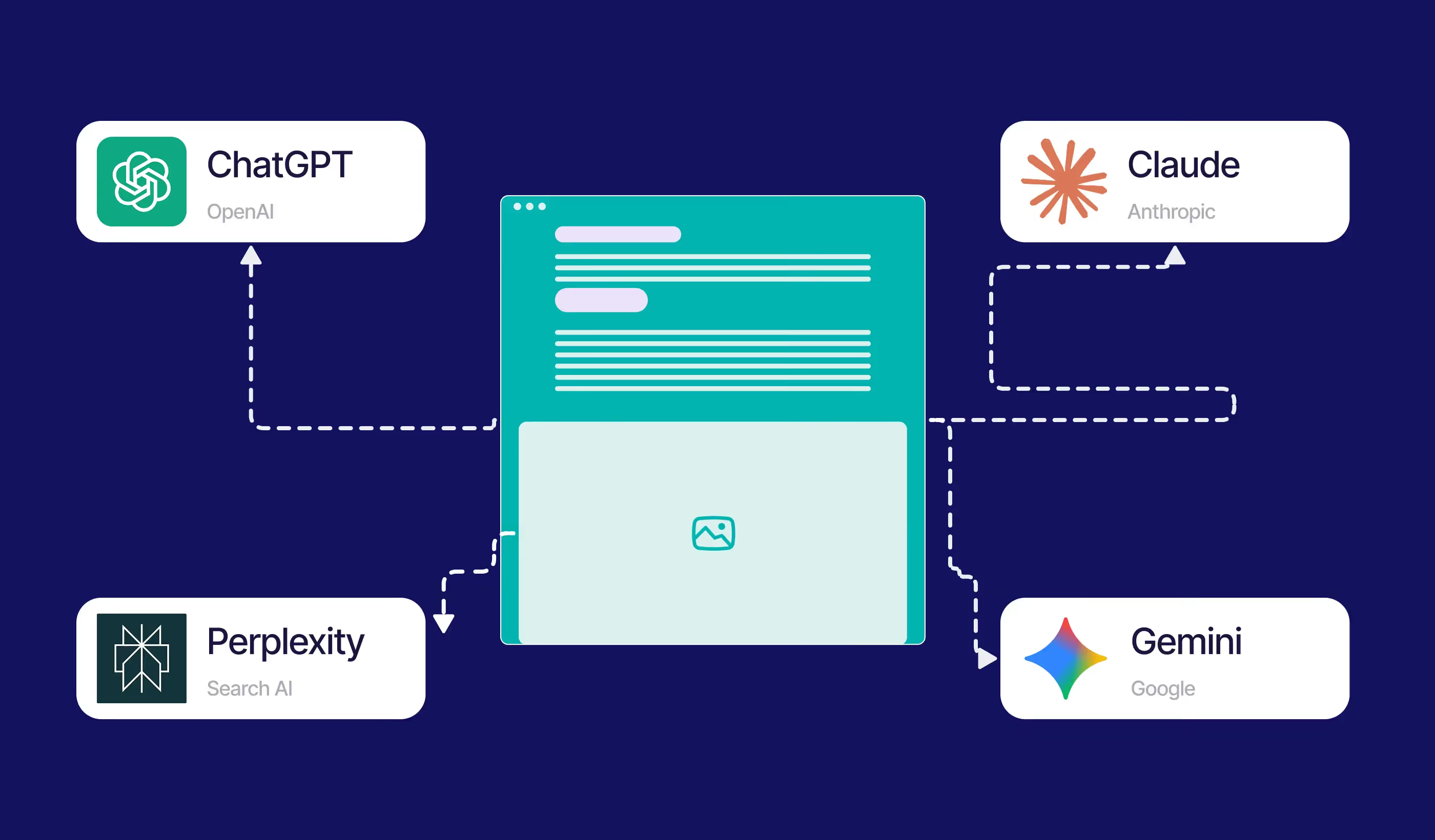
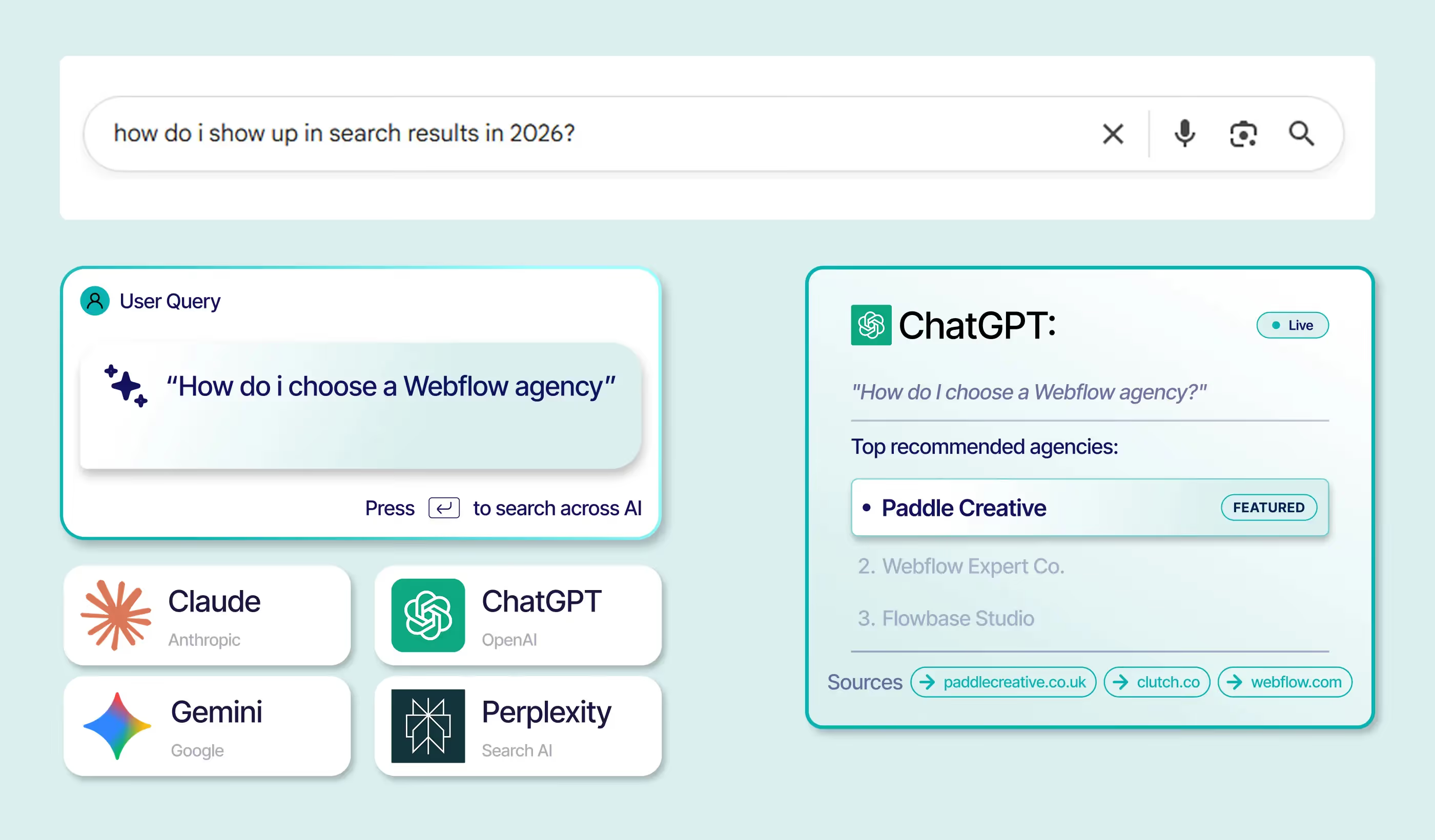
In 2026, AI-driven search engines (AEO) favour sites that provide "concise, rapid answers." A bloated site slows down the AI's ability to crawl and index your value proposition. By keeping your site "light," you ensure your brand is the first recommendation from the next generation of search tools.
7. Risk Mitigation: The Paddle Promise
We understand that marketers are often hesitant to strip back site elements for fear of losing "flair" or functionality. We don’t follow the crowd; we provide a human touch that balances brand impact with technical efficiency.
Every maintenance strategy we implement is backed by the Paddle Promise, our commitment to your peace of mind:
- The 'Confident Launch' Report: When we optimise your site for sustainability, you receive a full report showing the reduction in page weight and improved load times.
- Three-Month 'Bug-Free' Guarantee: We ensure that "leaning out" your site doesn't break your existing workflows. If it does, we fix it at no cost.
- Handing You the Keys: We don’t gatekeep. We provide video onboarding so your team knows how to upload assets in an eco-friendly way moving forward.
8. Speed-to-Market as a Green Metric
Efficiency isn't just about data; it's about time. Using Webflow's component-based architecture allows us to build faster. Because we aren't reinventing the wheel on every new page, we use fewer server resources during development. This "Atomic Design" approach not only improves your budget but also reduces the total energy required to manage your digital presence.
9. The Roadmap to a Low-Carbon Website
We simplify the complex. Our 5-step approach to turning a high-emission site into a lean growth engine involves:
- Step 1: The Audit – Measuring your current carbon footprint and identifying the biggest offenders.
- Step 2: Asset Compression – A deep dive into your library to replace carbon-intensive assets with modern, lightweight formats.
- Step 3: Code Clean-up – Pruning unused styles and interactions that slow down the "Experience Layer."
- Step 4: Script Rationalisation – Connecting your "Face" to only the most necessary "Brain" functions.
- Step 5: Ongoing Empowerment – Training your team to maintain these standards.
Conclusion: Lead the Herd, Don't Follow It
If your website is currently suffering from excess digital weight, you are leaving money on the table. A lighter site is a faster site, and a faster site is a more profitable one. By prioritising eco-friendly maintenance, you aren't just doing your bit for the planet; you are future-proofing your brand.
Stop taking "good enough" for granted. It is time to simplify, solve, and start doing work you are proud of.
Ready to slim down your site and speed up your growth? Book a call with Paddle Creative to get a sustainability audit started.
Author
Fact Checked By

%20(1).avif)





.avif)

%20(1).avif)
%20(2).avif)
%20(1).avif)
.avif)
%20(1).avif)
.avif)
.avif)
.avif)
.avif)
.avif)
.avif)
%20(1).avif)
.avif)
%20(1).avif)

.avif)

%20(1).avif)
%20(1).avif)
%20(1).avif)




%20(2).avif)
.avif)


.avif)

.avif)
.avif)
.avif)
.avif)
.avif)
.avif)
.avif)
%2520(1).avif)
%2520(1).avif)
.avif)
%2520(1).avif)
%2520(1).avif)
%2520(1).avif)
%2520(1).avif)
%2520(1).avif)
%2520(1).avif)
.avif)
.avif)


