
.svg)
%20(1).avif)
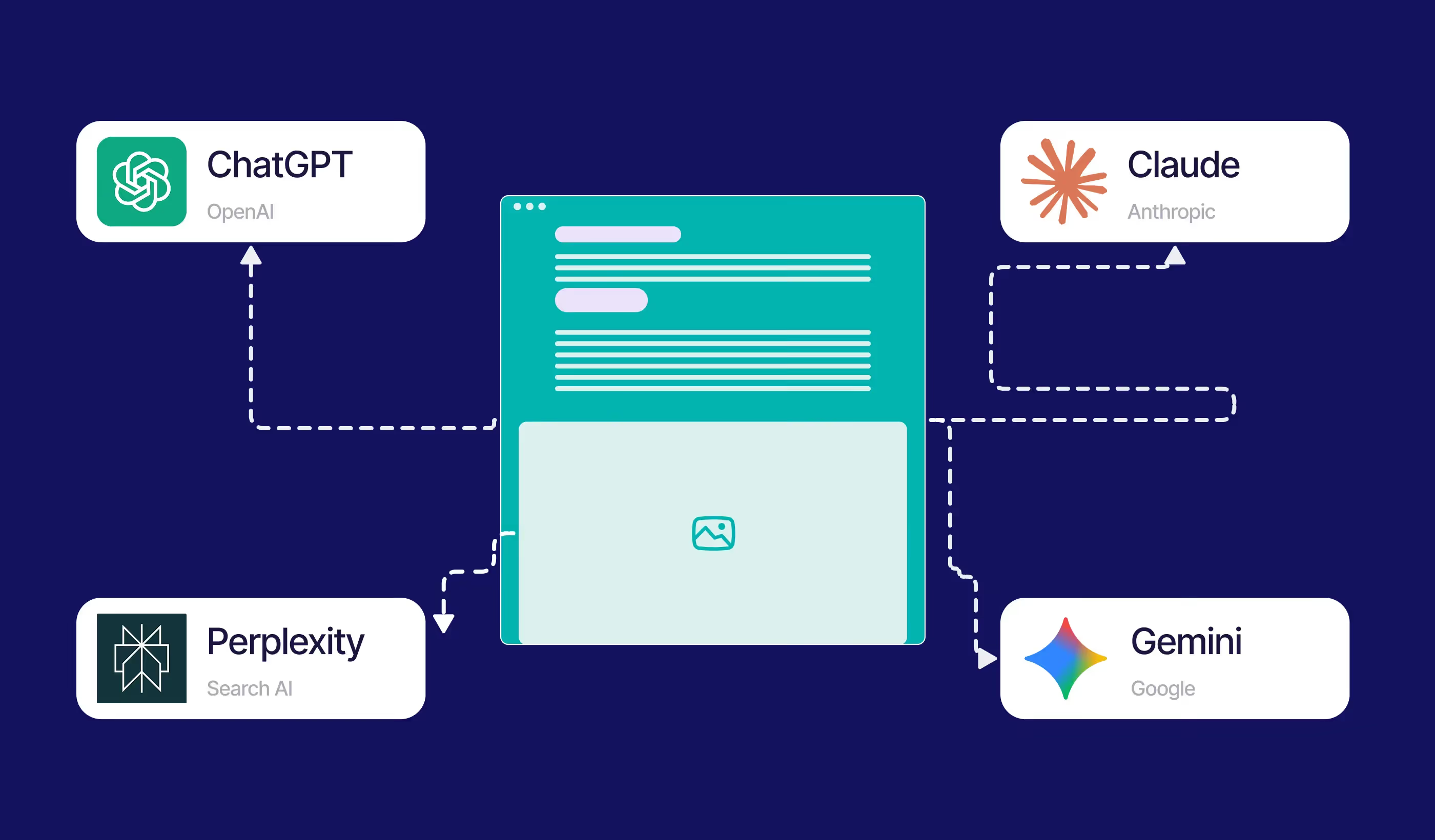
- AI tools prefer content that is clearly structured, well attributed, and easy to pull answers from.
- You are not gaming the system here. You are communicating clearly, which is what good content should do anyway.
- Every element below (title, dates, author, schema, FAQs) plays a role in how AI assesses and cites you.
- Use the checklist to audit an existing blog or build a new one from scratch.
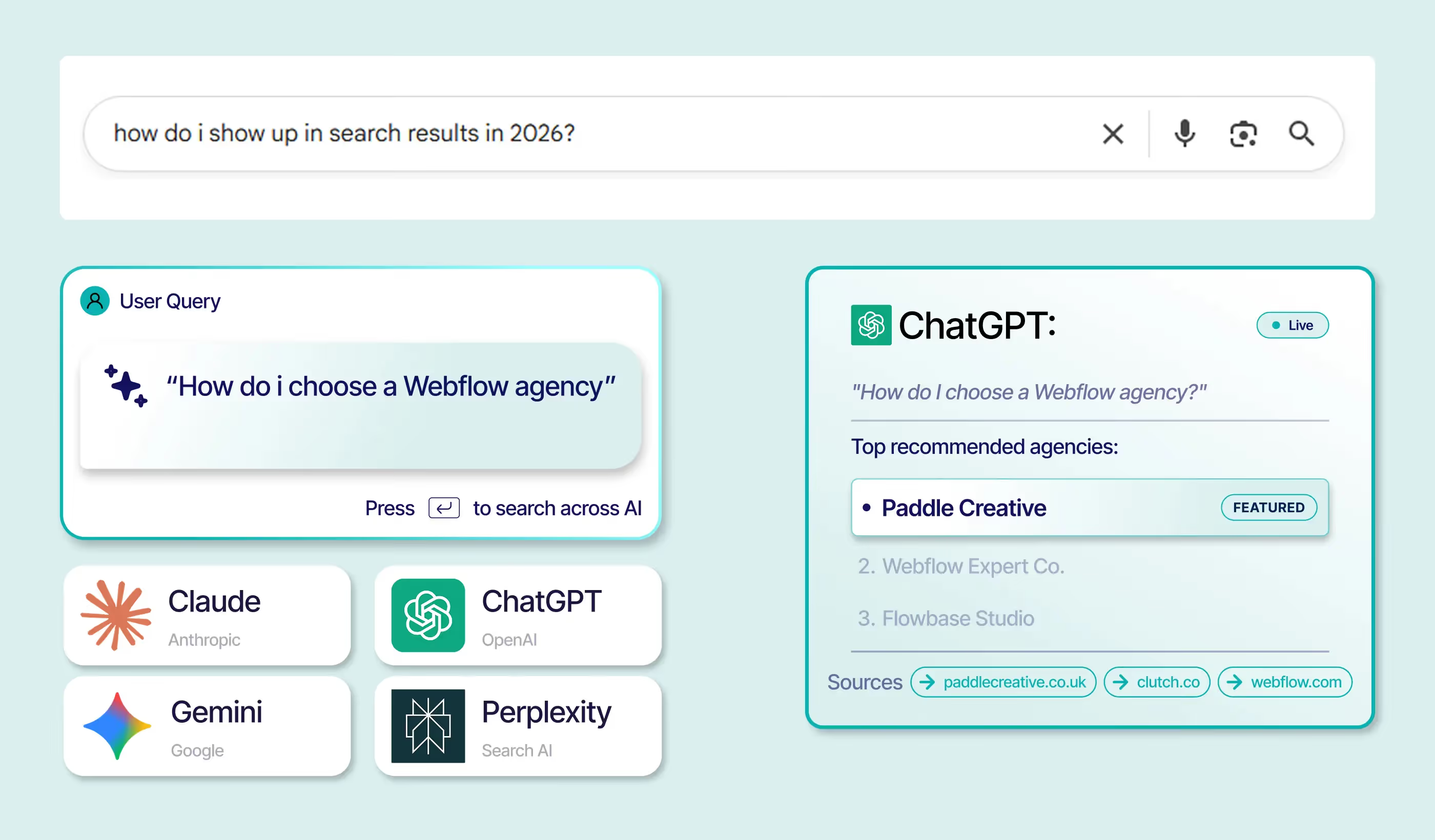
Something has changed. The way people find information has shifted, quietly and quickly, and fairly dramatically. More and more searches now end with an AI-generated answer, not a list of blue links to click through.
Here is the uncomfortable bit: if your content is not structured correctly, AI tools like Google AI Overviews, ChatGPT, and Perplexity will not cite you. They will cite someone else. Someone with the same ideas, just better packaging.
This guide covers every structural element your blog or content piece needs to get picked up and cited by AI systems. It is also the SOP we use at Paddle Creative when building blog pages for clients, so it doubles as a team checklist.
How to use this guide
- Read the checklist. Every structural element your blog needs, explained in plain English.
- Tick as you go. Audit an existing post or build a new one.
- Start with the high-impact four: quick answer block, FAQs, author bio, and schema markup.
- Layer in the rest. Dates, table of contents, key concepts, internal links, and metadata compound over time.
- Recheck after every update. AI visibility improves with consistency, not a one-off pass.
Quick answer
To get your blog cited in AI Overviews and answer engines, structure your content with a descriptive title, TL;DR summary, quick answer block, table of contents, dated authorship, FAQ section, key takeaways, key concepts, structured headings, schema markup, and optimised metadata.
1. Why your blog structure is now a ranking signal
Traditional SEO taught us to think in keywords. AEO (Answer Engine Optimisation) and GEO (Generative Engine Optimisation) ask something slightly different: can an AI read your page, understand what it answers, and trust you enough to quote you?
The answer depends almost entirely on structure. AI systems do not skim. They parse. They look for signals that tell them who wrote this, when, what it answers, and whether it is laid out in a way that is safe to surface to someone asking a question.
Paddle Creative insight: We have seen content with half the word count outperform longer pieces, simply because it was structured for extraction. A 400-word article with a proper quick answer, FAQs, and schema markup regularly beats a 2,000-word piece that reads like a stream of consciousness. AI rewards clarity, not effort.
Good news: most of the structural elements AI tools look for are the same things that make your content readable for humans. You are not writing worse content for machines. You are presenting good content in a way that works for everyone.
Our one-off AI Readiness Audit tells you exactly where you stand, and what to do about it.

2. What is E-E-A-T, and why does it matter for AI?
E-E-A-T stands for Experience, Expertise, Authoritativeness, and Trustworthiness. It is the framework Google uses to judge whether content is worth surfacing, and increasingly it is the lens AI systems use to decide whose content to cite.
Each pillar does a specific job:
- Experience. Has the author actually done this? First-hand experience, case studies, client outcomes, and real observations carry more weight than summarised theory.
- Expertise. Does the author know the subject? Credentials, role, and demonstrated knowledge signal expertise to readers and AI crawlers.
- Authoritativeness. Is the source credible? Named authors, cited outcomes, external links, and a consistent body of work build authority over time.
- Trustworthiness. Can readers and AI rely on this content? Accurate dates, honest claims, transparent authorship, and schema markup all build trust.
The structural elements in this guide (author bios, dates, schema markup, key concepts) exist largely to satisfy these four signals. Get them right and you are not only optimising for AI. You are building a content presence that earns citations across every channel.
Here is what that looks like in practice:
Paddle Creative x Notabene. A full strategic Webflow rebuild for a global crypto compliance leader, replacing a slow, debt-laden site with a high-performance platform. The result: a 760% increase in monthly transaction volume year on year. Real outcomes are the strongest E-E-A-T signal you have. Use them.
3. The complete AI-citation checklist
Below is every element your blog or content page needs. Use it to track a new piece or audit an existing one.
Title and URL
Your title is the first thing humans and AI use to understand your content. It should reflect the question being answered, not just describe the topic. The URL should be short, lowercase, and mirror the title's intent.
- Title reflects the primary user question or prompt. "How to...", "Why your...", "What is...", framed around what someone would actually ask.
- Title is clear and specific, not vague or clever for its own sake. Save the wit for the subheading. The title needs to be unambiguous for AI parsing.
- URL slug is short, lowercase, and hyphenated. No dates unless the content is genuinely time-specific.
- URL mirrors the title's core phrase. For example, /migrate-wordpress-webflow.
TL;DR summary
A TL;DR gives fast readers, and AI systems scanning for extractable content, an immediate overview. Put it near the top and summarise the key points in three to five short bullets.
- TL;DR appears near the top of the page. Before the main body, after the intro.
- Three to five concise bullets covering the key takeaways. Each should stand alone as a meaningful statement.
- Visually distinct from the body. Use a card, a coloured background, or a clear label.
Quick answer block
Google AI Overviews and other answer engines often pull from short, direct summaries near the top of a page. A 40 to 60 word quick answer that addresses your primary prompt is one of the most effective signals you can add. Keep it factual. No marketing language.
- Clearly labelled "Quick Answer" or similar. The label helps AI identify it as an extractable block.
- 40 to 60 words, factual, no marketing language. Avoid "we believe" or "the best way", anything that reads as opinion.
- Directly answers the primary question. Not a teaser. A genuine, standalone answer.
- Appears before the main body, ideally within the first scroll.
Table of contents
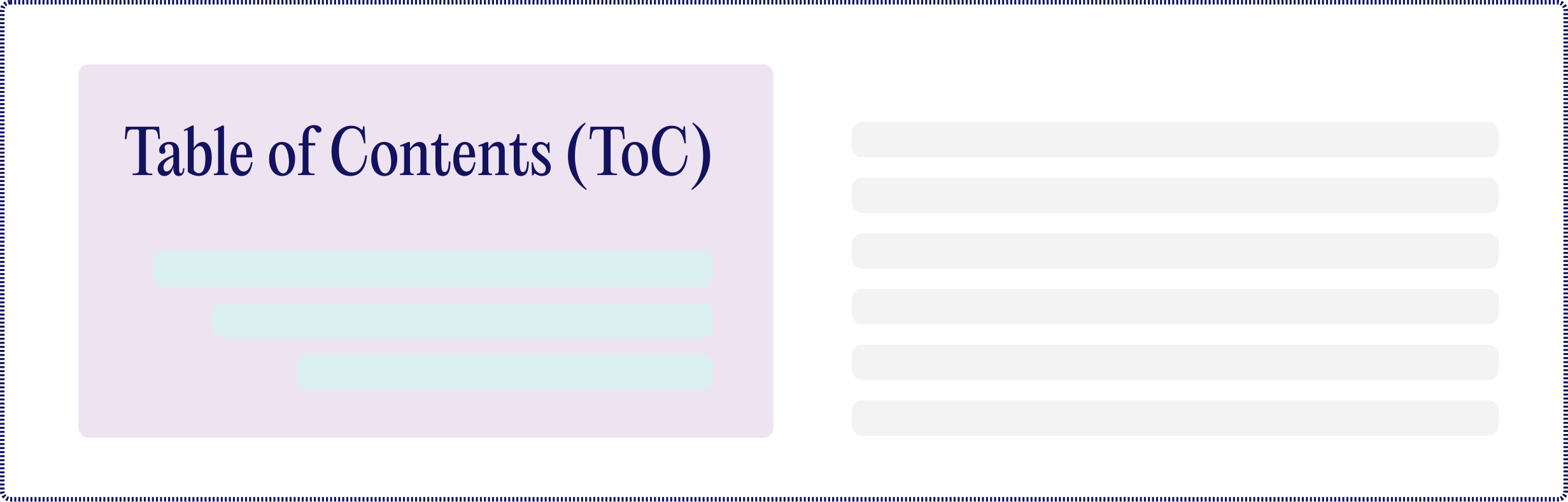
A table of contents helps readers navigate and tells AI how your content is structured. Each link is a signal that says this is a distinct section answering a specific sub-question.
- Present and linked to each major section via anchor. Every H2 should have a table of contents entry.
- Labels are short, descriptive, and scannable.
- Positioned before the main body. Sidebar or inline, just make it visible without scrolling.
Structured headings
Headings are the skeleton of your content. For AI readability they need a logical hierarchy (H1, then H2, then H3) and, where possible, should read as questions or clear topic statements.
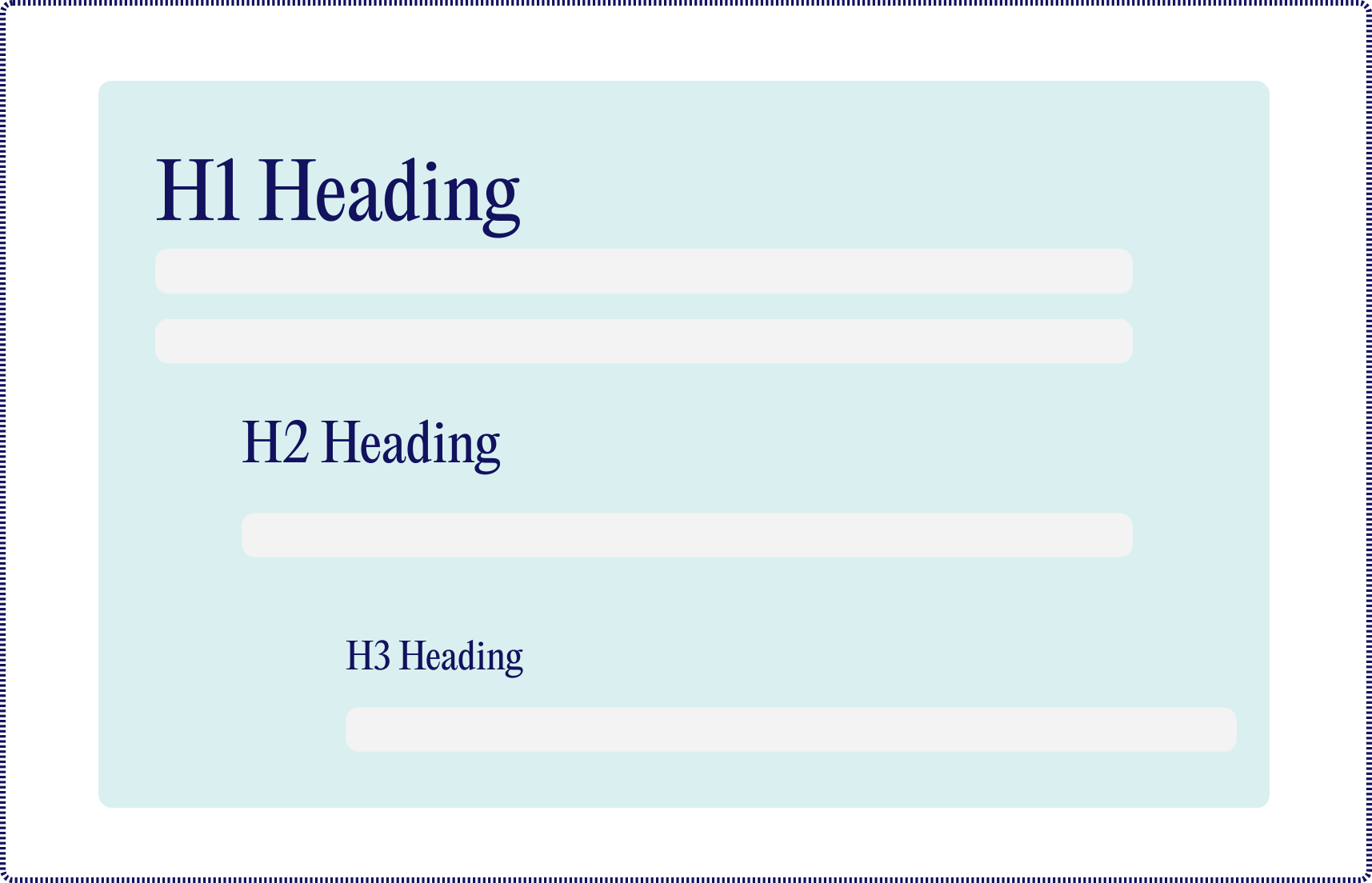
- One H1 only, matching or closely reflecting the page title.
- H2s cover each distinct section or sub-topic. Phrased as questions or clear statements where possible.
- No heading levels skipped, for example H1 straight to H3.
- Headings use natural language, not keyword-stuffed phrases.
- Each section has an anchor ID for direct linking.
Author bio
An author bio tells AI that a real, qualified person wrote this. It is a core E-E-A-T signal.
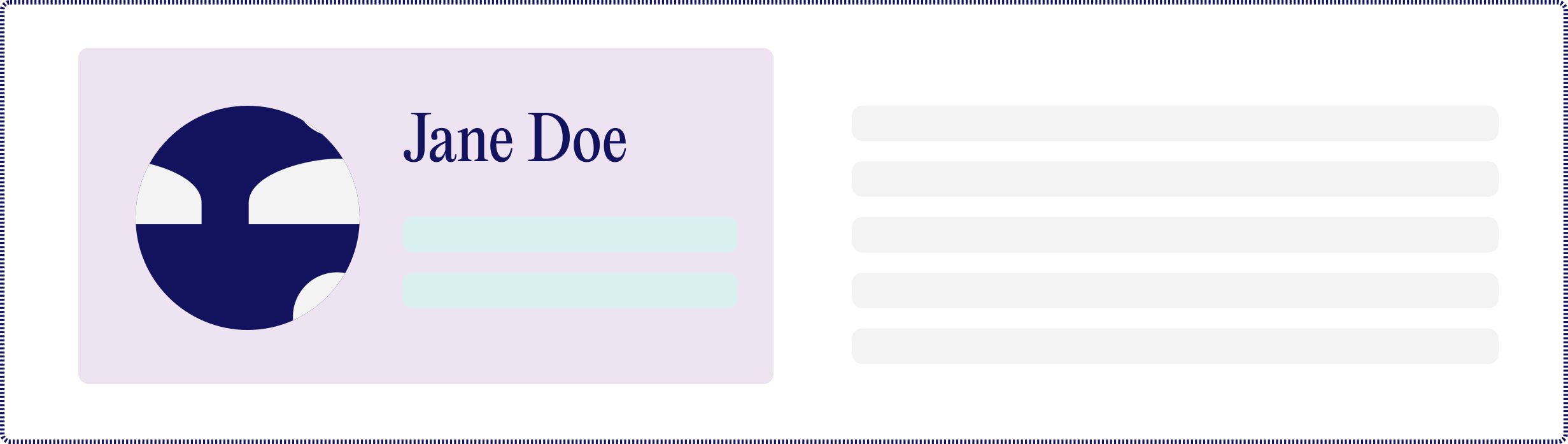
- Author name and role are clearly visible on the page, not just in the CMS.
- Bio includes relevant expertise and credentials. Two to four sentences on what makes this person qualified.
- Author photo or avatar is included. It humanises the content and reinforces E-E-A-T.
- Author schema is present in the page code. Use the Person schema in your JSON-LD.
Published and updated dates
AI systems use date signals to judge freshness. A piece from three years ago with no update date will rank lower for time-sensitive topics. Show both dates and keep the updated date accurate.
- Original publication date is visible on the page.
- "Last updated" date is visible and accurate. Update it whenever you make substantive changes.
- Dates are in the Article schema. The datePublished and dateModified fields in your JSON-LD.
FAQ section
FAQs are one of the most powerful elements for AI citation. Each question is a prompt surface, a signal that says this page answers questions like this. Write them as natural questions and wrap them in FAQPage schema.
.svg)
- Three to six FAQs based on real questions people ask. Check Google's People Also Ask, Search Console, and tools like Perplexity for real prompt data.
- Questions are phrased conversationally. "How do I...", "What is the best way to...", "Does X affect Y?"
- Answers are 40 to 80 words, direct and factual.
- FAQPage schema is applied. Each Q&A has a mainEntity with @type: Question and acceptedAnswer.
- FAQs link to relevant internal pages where it helps.
Key takeaways section
A key takeaways section at the end is one of the clearest signals you can give AI. It is a structured, extractable summary. Keep bullets factual and write each as a complete, standalone statement.
- Four to six bullets summarising the main insights.
- Each bullet is factual and could stand alone as a citation. If an AI pulled it out of context, would it still make sense? If yes, you are on track.
- Positioned at or near the end of the article.
- No promotional language. "Webflow sites can rank well in search" works. "Webflow is the best CMS on the planet" does not.
Key concepts section
Most blogs explain how to do something but do not define the concepts behind it. AI prefers sources that do both. A key concepts section (three to five definitions, 40 to 60 words each) signals subject authority and gives AI clear, citable definitions.
- Three to five core concepts are defined.
- Each definition is 40 to 60 words in a neutral, educational tone.
- Concepts are the ones a newcomer would need to understand the article.
Schema markup
Schema markup is structured data in your page code that tells search engines and AI crawlers exactly what is on the page. At minimum, every blog post should include Article, FAQPage, and BreadcrumbList schema.
- Article schema with headline, author, datePublished, and dateModified.
- FAQPage schema wraps the FAQ section. Each Q&A has a mainEntity with @type: Question and acceptedAnswer.
- BreadcrumbList schema reflects the page's position in your site structure.
- Schema validated in Google's Rich Results Test.
- Person schema included for the author.
Internal linking
Internal links help AI understand how your content relates to other pages. Every article should link to at least two or three related pieces. Use descriptive anchor text and link in both directions where it helps.
- At least two to three internal links to relevant related content.
- Anchor text is descriptive, not "click here" or "read more". For example, "see our guide on Webflow SEO".
- Related pages link back to this article.
Metadata
Your meta title and description are how your content introduces itself to search engines and AI tools. Keep them clear, human-readable, and framed around the question being answered.
- Meta title includes the primary question or prompt. 50 to 60 characters. Reads naturally, not a keyword list.
- Meta description summarises the page value in 150 to 160 characters. What will the reader get? Answer that.
- Open Graph title and description are set. Used by social platforms and increasingly by AI tools when citing sources.
- No keyword stuffing. Both fields should read like a human wrote them.
Paddle Creative insight: One of the quickest wins we find when auditing client sites is the metadata. Not because it is broken, but because it was written for keyword density, not for humans. Rewrite a meta description as a genuine answer to a question and you often see click-through rates improve alongside AI citation rates. Same fix, double benefit.
4. Key takeaways
- AI tools cite content structured for extraction, not just well-written content.
- A TL;DR, quick answer block, FAQ section, and key takeaways are the four highest-impact elements for AI citation.
- Author bios, published dates, and updated dates are trust signals that directly influence how AI judges content quality.
- Schema markup (Article, FAQPage, Person) makes your content machine-readable and improves your chances of appearing in AI Overviews.
- Internal linking helps AI place your content within your wider site. Do not treat each article as a standalone island.
- Every structural element here also improves the experience for human readers. Good structure is a double win.
5. Key concepts
These are the core terms behind AI-optimised content, useful whether you are writing it yourself or briefing someone else.
Answer Engine Optimisation (AEO). Structuring content so it can be directly extracted and cited by AI systems such as Google AI Overviews, ChatGPT, and Perplexity. It leans on clear answers, structured headings, and authoritative source signals like author bios and schema markup.
Generative Engine Optimisation (GEO). Optimising content so it becomes a trusted source for large language models when they generate answers. GEO includes strong entity signals, clearly defined concepts, cited expertise, and structured explanations an LLM can reliably reference.
E-E-A-T. Experience, Expertise, Authoritativeness, and Trustworthiness, the framework Google uses to evaluate content quality. Author credentials, factual accuracy, publication dates, and external citations all feed your E-E-A-T.
Schema markup. Structured data added to a page's code (usually in JSON-LD) that tells search engines and AI crawlers exactly what type of content is present. Common types include Article, FAQPage, BreadcrumbList, and Person.
AI visibility. How often a brand, website, or piece of content appears as a cited source in AI-generated answers across platforms like Google AI Overviews, ChatGPT, and Perplexity. Improved through structured content, clear authorship, and regular updates.
Quick answer block. A short, 40 to 60 word summary near the top of a page that directly answers the primary question being targeted. One of the most consistently cited structural elements in AI Overviews and other answer engine outputs.
Ready to see where you actually stand?
You have read the checklist. Now find out how your site holds up. The AI Readiness Audit is a one-off deep dive into your site and brand presence. No jargon, no fluff. Just a clear picture of what is working, what is not, and what to fix first. £750, one-off. Book your audit.
Author
Fact Checked By




.avif)



.avif)

%20(1).avif)
%20(2).avif)
%20(1).avif)
.avif)
.avif)
%20(1).avif)
.avif)
.avif)
.avif)
.avif)
.avif)
.avif)
%20(1).avif)
.avif)
%20(1).avif)

.avif)

%20(1).avif)
%20(1).avif)
%20(1).avif)






%20(2).avif)
.avif)


.avif)

.avif)
.avif)
.avif)
.avif)
.avif)
.avif)
.avif)
%2520(1).avif)
%2520(1).avif)
.avif)
%2520(1).avif)
%2520(1).avif)
%2520(1).avif)
%2520(1).avif)
%2520(1).avif)
%2520(1).avif)
.avif)
.avif)

.avif)


